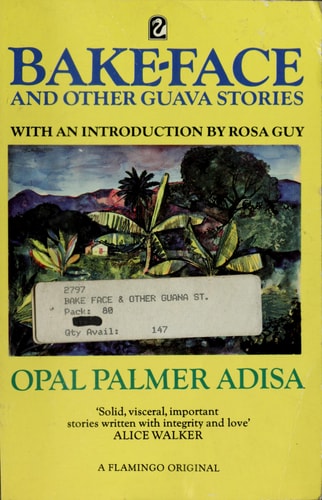
Bake-face and Other Stories
0
0
As an Amazon Associate and affiliate partner, Menrva Books earns from qualifying purchases. Learn more
Author Description
The four stories in this collection are about contemporary Jamaican women. Not the ones seen in TV travel ads, but women who must struggle to maintain their integrity, as much as their physical survival, in a society plagued for centuries by slavery, colonialism and poverty. These women are descendants of African slaves, and the reality of their lives has been camouflaged by the perennial image the Caribbean evokes for outsiders—an image that merges, paradoxically, paradise and servitude. In writing about her sisters who still live in the Jamaican countryside, Adisa gives voice to their pleasures, conflicts and feelings as few Jamaican writers before her have done. Her stories are about a plantation worker, a domestic, a village wife, and a fisherman's wife, women who constitute the majority of Jamaican women but who seldom appear as central in even their countrymen's works.
Menrva's Summary
THE PULSE
This collection of four stories centers on the internal and external struggles of contemporary Jamaican women as they navigate the enduring legacies of colonialism and poverty. Each protagonist faces the daily pressure of maintaining personal integrity while securing physical survival in a society that often overlooks their lived realities. Adisa employs a narrative framework that shifts between the perspectives of a plantation worker, a domestic, a village wife, and a fisherman's wife. These women confront systemic obstacles and societal expectations that contrast sharply with the idealized, tourist-facing image of the Caribbean.
INSIDE THE PAGES
- Focus on the lives of working-class Jamaican women in rural settings
- Exploration of the intersection between personal identity and historical trauma
- Examination of the paradox between the Caribbean as a paradise and a site of servitude
- Use of character-driven narratives to highlight the domestic and professional challenges of the protagonists
- Emphasis on the resilience required to survive in a post-colonial economic landscape
- Portrayal of the specific social dynamics within Jamaican village life
- Integration of themes regarding the long-term impact of slavery and colonialism on modern family structures
- Centering of voices traditionally marginalized in regional literature
THE COLLECTIVE ECHO
This collection is regarded as a significant contribution to Caribbean literature for its commitment to centering the experiences of rural Jamaican women. The work is noted for its rejection of the romanticized tropes often associated with the region in favor of a grounded, realistic portrayal of daily life. Readers and critics alike have highlighted the author's ability to articulate the nuanced conflicts and pleasures of her subjects with clarity and empathy. The stories serve as a vital counter-narrative to the external perceptions of the Caribbean, providing a necessary depth to the literary representation of its people.
Page Count:
128
Publication Date:
1989-01-01
Publisher:
Flamingo
ISBN-10:
0006543731
ISBN-13:
9780006543732
Contemporary
Short Stories
Modern fiction
Social Realism
Caribbean
Community Tags
Similar Books