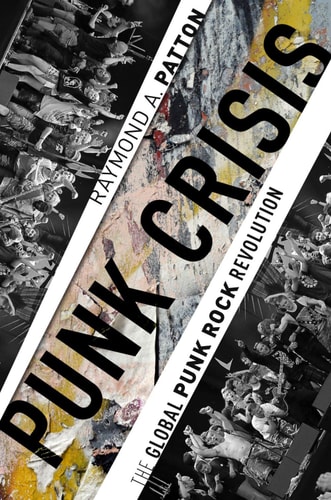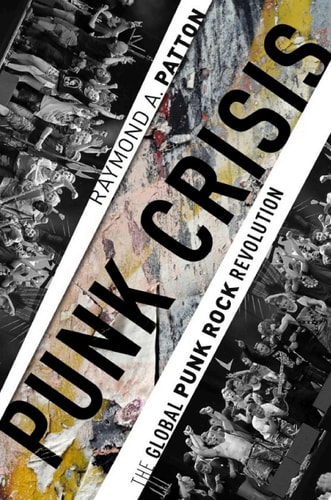
Punk Crisis: The Global Punk Rock Revolution
0
0
As an Amazon Associate and affiliate partner, Menrva Books earns from qualifying purchases. Learn more
Author Description
In March 1977, John "Johnny Rotten" Lydon of the punk band the Sex Pistols looked over the Berlin wall onto the grey, militarized landscape of East Berlin, which reminded him of home in London. Lydon went up to the wall and extended his middle finger. He didn't know it at the time, but the Sex Pistols' reputation had preceded his gesture, as young people in the "Second World" busily appropriated news reports on degenerate Western culture as punk instruction manuals. Soon after, burgeoning Polish punk impresario Henryk Gajewski brought the London punk band the Raincoats to perform at his art gallery and student club-the epicenter for Warsaw's nascent punk scene. When the Raincoats returned to England, they found London erupting at the Rock Against Racism concert, which brought together 100,000 "First World" UK punks and "Third World" Caribbean immigrants who contributed their cultures of reggae and Rastafarianism. Punk had formed networks reaching across all three of the Cold War's "worlds".The first global narrative of punk, Punk Crisis examines how transnational punk movements challenged the global order of the Cold War, blurring the boundaries between East and West, North and South, communism and capitalism through performances of creative dissent. As author Raymond A. Patton argues, punk eroded the boundaries and political categories that defined the Cold War Era, replacing them with a new framework based on identity as conservative or progressive. Through this paradigm shift, punk unwittingly ushered in a new era of global neoliberalism.
Menrva's Summary
THE THESIS
How did the transnational punk movement challenge the established geopolitical order of the Cold War era? Raymond A. Patton, a historian of modern Europe, utilizes archival research and cultural analysis to argue that punk served as a catalyst for eroding the rigid boundaries between East and West, North and South. He posits that by fostering creative dissent and cross-cultural exchange, punk movements inadvertently dismantled traditional Cold War political categories, ultimately facilitating the transition toward a global neoliberal framework.
THE SCOPE MAP
What You Will Find
- Analysis of punk scenes in London, East Berlin, and Warsaw
- Examination of the intersection between punk music and anti-racist activism
- Investigation of the cultural exchange between Western punk and Caribbean musical influences
- Theoretical framework linking subcultural identity to global political shifts
Scope Limits
- The text does not provide a comprehensive discography or exhaustive history of every regional punk scene
- The analysis focuses primarily on the political and sociological implications rather than the technical evolution of the music itself
THE AUTHORITY PERSPECTIVE
Scholars and music historians view this work as a significant contribution to the study of subcultures within the context of global political history. Readers frequently note the academic density of the prose, which effectively bridges the gap between music journalism and formal historical analysis.
Page Count:
232
Publication Date:
2018-01-01
Publisher:
Oxford University Press
ISBN-10:
0190872381
ISBN-13:
9780190872380
History
Music
Punk Rock
Cold War
Humanities
Punk
Sociology
European History