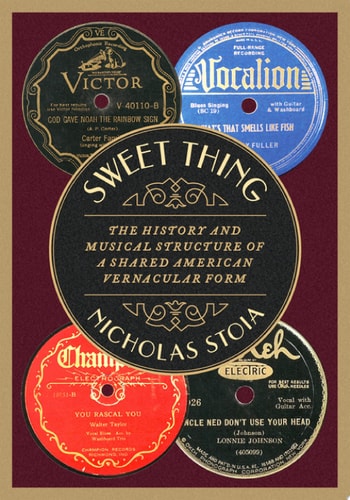
Sweet Thing
0
0
As an Amazon Associate and affiliate partner, Menrva Books earns from qualifying purchases. Learn more
Author Description
As Children, Many Of Us Learn To Sing, If You're Happy And You Know It, Clap Your Hands. But Despite The Familiarity Of This Tune, Few Of Us Realize That What We're Singing Is Actually Part Of A Pervasive - And Centuries-old - Musical Scheme. This Particular Pattern, The Sweet Thing Scheme, Has Generated A Large Group Of Songs Spanning A Broad Range Of Topics, Genres, And Time Periods, But All Related Through A Specific Stanzaic Form. Early Twentieth-century Blues Songs My Babe And Motherless Children, Country Songs Peg And Awl And Crawdad Song, And Gospel Songs Pure Religion And This Train Use This Form, Along With Popular Songs Like Ray Charles's I Got A Woman, The Beatles's One After 909, And The Velvet Underground's I'm Waiting For The Man. Sweet Thing: The History And Musical Structure Of A Shared American Vernacular Form Studies One Of The Most Productive And Enduring Shared Musical Resources In North American Vernacular Music. Author Nicholas Stoia Offers The Most Comprehensive Examination To Date Of The Long History Of The Sweet Thing Scheme, Exploring How It Made Its Way From Sixteenth-century Scotland To Eighteenth-century British Broadside Ballads To Nineteenth-century American Ragtime. Stoia Also Examines The Form In Various Contexts, Including Early Blues And Country Music, And Moving Forward To Rhythm And Blues, Soul, And Rock Music, Connecting These Modern Forms To Their Ancient Roots. Through This Close Look At A Ubiquitous Musical From, Sweet Thing Shows Us How It Has Linked Listeners And Musicians Alike Across The Boundaries Of Genre, Race, And Even Time.
Menrva's Summary
THE THESIS
How does a single, centuries-old musical scheme persist across diverse genres and eras to define a shared American vernacular? Nicholas Stoia, a musicologist, utilizes historical musicology and structural analysis to trace the evolution of the 'Sweet Thing' scheme. He argues that this specific stanzaic form acts as a foundational resource that links disparate musical traditions, from early Scottish ballads to modern rock and soul.
THE SCOPE MAP
What You Will Find
- Historical trajectory of the 'Sweet Thing' scheme from 16th-century Scotland to 20th-century American popular music.
- Structural analysis of stanzaic forms in blues, country, gospel, and rock.
- Comparative studies of songs ranging from 'If You're Happy and You Know It' to works by Ray Charles and The Velvet Underground.
Scope Limits
- The study focuses primarily on the formal and structural lineage of the scheme rather than an exhaustive biography of every artist mentioned.
- It does not cover non-Western musical traditions outside the direct lineage of the British and American vernacular forms discussed.
THE AUTHORITY PERSPECTIVE
Scholars and music historians recognize this work as a rigorous examination of vernacular musical structures. Readers frequently note the academic density of the prose, which provides a detailed technical framework for understanding the continuity of American song forms.
Page Count:
240
Publication Date:
2021-01-01
Publisher:
Oxford University Press
ISBN-10:
0190881984
ISBN-13:
9780190881986
Music
Music History
American Music
Music theory
Community Tags
Similar Books