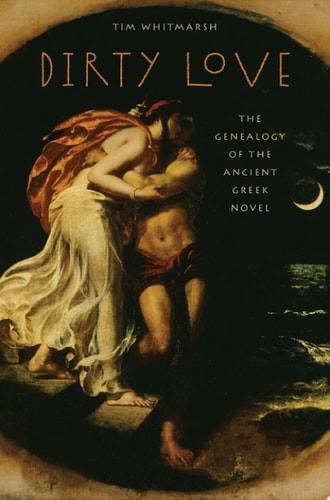
Dirty Love
0
0
As an Amazon Associate and affiliate partner, Menrva Books earns from qualifying purchases. Learn more
Author Description
Where Does The Greek Novel Come From? This Book Argues That Whereas Much Of Greek Literature Was Committed To A Form Of Cultural Purism, Presenting Itself As Part Of A Continuous Tradition Reaching Back To Definitively Greek Founding Fathers, The Novel Revelled In Cultural Hybridity. The Earliest Greek Novelistic Literature Combined Greek And Non-greek Traditions (or At Least Affected To Combine Them: It Is Often Hard To Tell How ‘authentic’ The Non-greek Material Is). More Than This, However, It Also Often Self-consciously Explored Its Own Hybridity By Focusing On Stories Of Cultural Hybridisation, Or What We Would Now Call ‘mixed Race’ Relations. This Book Is Thus Not A Conventional Account Of The Origins Of The Greek Novel: It Is Not An Attempt To Pinpoint The Moment Of Invention, And To Trace Its Subsequent Development In A Straight Line. Rather, It Makes A Virtue Of The Murkiness, Or ‘dirtiness’, Of The Origins Of The Novel: There Is No Single Point Of Creation, No Pure Tradition, Only Transgression, Transformation And Mess. The Novel Thus Emerges As An Outlier Within The Greek Literary Corpus: A Form Of Literature Written In Greek, But Not Always Committing To Greek Cultural Identity. Dirty Love Focuses Particularly On The Relationship Between Persian, Egyptian, Jewish And Greek Literature, And Covers Such Texts As Ctesias’s Persica, Joseph And Aseneth, The Alexander Romance And The Tale Of Ninus And Semiramis.
Menrva's Summary
THE THESIS
This book investigates the origins of the Greek novel by challenging the traditional narrative of cultural purism in ancient literature. Tim Whitmarsh, a Fellow in Greek at Cambridge, argues that the Greek novel is defined by its inherent cultural hybridity rather than a singular, linear development. By examining the intersection of Greek, Persian, Egyptian, and Jewish traditions, the author posits that the genre emerged from a space of transgression and transformation, intentionally embracing a 'dirty' or messy cultural identity.
THE SCOPE MAP
What You Will Find
- Analysis of the relationship between Greek literature and Persian, Egyptian, and Jewish traditions.
- Examination of specific texts including Ctesias’s Persica, Joseph and Aseneth, the Alexander Romance, and the Tale of Ninus and Semiramis.
- A theoretical framework that redefines the novel as an outlier within the Greek literary corpus.
Scope Limits
- The book does not attempt to provide a conventional, chronological history of the Greek novel.
- It avoids seeking a single, definitive point of origin for the genre.
THE AUTHORITY PERSPECTIVE
Scholars recognize this work as a significant intervention in the study of Hellenistic literature, particularly for its focus on cross-cultural exchange. Readers frequently note the academic density of the prose and the author's ability to synthesize complex historical and literary data into a cohesive argument.
Page Count:
0
Publication Date:
2018-01-01
Publisher:
Oxford University Press
ISBN-10:
0190880791
ISBN-13:
9780190880798
History
Literary Criticism
Criticism history
Community Tags
Similar Books