A Taste for China: English Subjectivity and the Prehistory of Orientalism
0
0
As an Amazon Associate and affiliate partner, Menrva Books earns from qualifying purchases. Learn more
Author Description
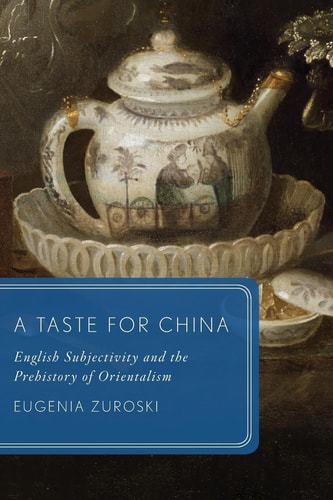
Challenging existing narratives of the relationship between China and Europe, this study establishes how modern English identity evolved through strategies of identifying with rather than against China. Through an examination of England's obsession with Chinese objects throughout the long eighteenth century, A Taste for China argues that chinoiserie in literature and material culture played a central role in shaping emergent conceptions of taste and subjectivity.Informed by sources as diverse as the writings of John Locke, Alexander Pope, and Mary Wortley Montagu, Zuroski begins with a consideration of how literature transported cosmopolitan commercial practices into a model of individual and collective identity. She then extends her argument to the vibrant world of Restoration comedy-most notably the controversial The Country Wife by William Wycherley-where Chinese objects are systematically associated with questionable tastes and behaviors. Subsequent chapters draw on Defoe, Pope, and Swift to explore how adventure fiction and satirical poetry use chinoiserie to construct, question, and reimagine the dynamic relationship between people and things. The second half of the eighteenth century sees a marked shift as English subjects anxiously seek to separate themselves from Chinese objects. A reading of texts including Aphra Behn's Oroonoko and Jonas Hanway's Essay on Tea shows that the enthrallment with chinoiserie does not disappear, but is rewritten as an aristocratic perversion in midcentury literature that prefigures modern sexuality. Ultimately, at the century's end, it is nearly disavowed altogether, which is evinced in works like Charlotte Lennox's The Female Quixote and Jane Austen's Northanger Abbey.A persuasively argued and richly textured monograph on eighteenth-century English culture, A Taste for China will interest scholars of cultural history, thing theory, and East-West relations.
Menrva's Summary
THE THESIS
How did the English obsession with Chinese objects during the long eighteenth century fundamentally shape the development of modern English identity and subjectivity? Eugenia Zuroski, a scholar of eighteenth-century literature and culture, investigates the role of chinoiserie in the construction of English selfhood. By analyzing a wide range of literary and material sources, she argues that English identity was not formed in opposition to China, but through a complex process of identification and subsequent disavowal that prefigures modern concepts of taste and sexuality.
THE SCOPE MAP
What You Will Find
- Analysis of eighteenth-century literary texts by authors including John Locke, Alexander Pope, Mary Wortley Montagu, Daniel Defoe, Jonathan Swift, Aphra Behn, Charlotte Lennox, and Jane Austen.
- Examination of Restoration comedy, specifically William Wycherley's The Country Wife, to understand the association between Chinese objects and social behavior.
- Application of thing theory to explore the dynamic relationship between human subjects and material culture.
Scope Limits
- The study focuses primarily on English cultural and literary history rather than providing a comprehensive history of China or actual Sino-British diplomatic relations.
- The analysis is confined to the long eighteenth century and does not extend into nineteenth-century colonial discourse.
THE AUTHORITY PERSPECTIVE
Scholars in the field of eighteenth-century studies and cultural history recognize this work as a significant contribution to the understanding of how material culture informs national identity. Readers frequently note the academic density of the prose and the rigorous interdisciplinary approach taken by the author.
Page Count:
304
Publication Date:
2018-04-01
Publisher:
Oxford University Press
ISBN-10:
0190887435
ISBN-13:
9780190887438
Cultural History
Literary Criticism
Orientalism
Eighteenth Century
Thing Theory
British literature
Community Tags
Similar Books