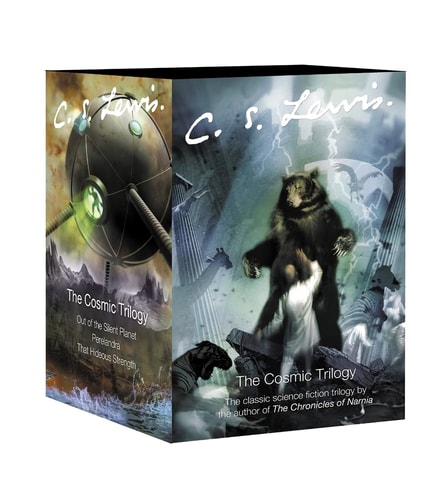
The Cosmic Trilogy
0
0
As an Amazon Associate and affiliate partner, Menrva Books earns from qualifying purchases. Learn more
Author Description
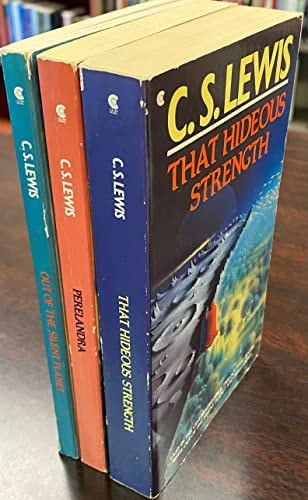
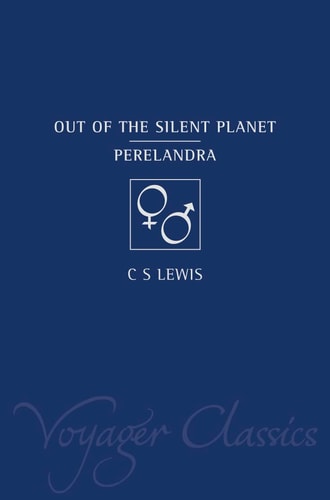
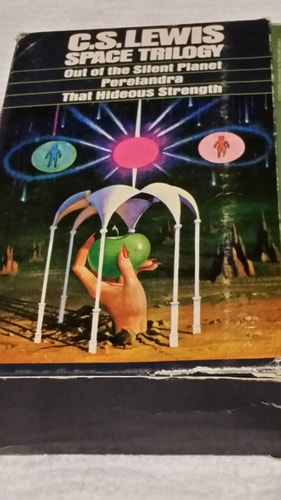
The Cosmic Trilogy relates the interplanetary travels of Ransom, C.S. Lewis's ill-informed and terrified victim who leaves Earth much against his will and who, in the first book of the trilogy, Out of the Silent Planet, published by the Bodley Head in 1938, encounters the imaginary and delightful world of Macalandra. In the second book, Perelandra (1943), Ransom is transported to a world of sweet smells and delicious tastes, a new Garden of Eden in which is enacted, with a difference, the story of Temptation. That Hideous Strength (1945) completes the trilogy and finds Dr Ransom returned from his travels in space and living in an English university town - where the Senior Common Room is given a mysterious depth, a more than earthly dimension which such things, in the author's view, always have in life.C.S. Lewis believed that popular science was the new mythology of his age, and in The Cosmic Trilogy he ransacks the uncharted territory of space and makes that mythology the medium of his spiritual imagination.
Menrva's Summary
THE PULSE
The scholar Elwin Ransom is abducted by terrestrial agents and thrust into a series of interplanetary encounters that challenge his understanding of morality, theology, and the nature of existence. Ransom serves as the unwilling protagonist, navigating alien landscapes and cosmic hierarchies while opposing forces seek to exploit or corrupt the spiritual integrity of other worlds. The narrative framework shifts from the adventurous exploration of alien biology in the first volume to the intense, localized spiritual warfare of the final installment. Throughout the trilogy, Ransom must reconcile his academic background with the profound, often terrifying realities of a universe teeming with celestial intelligence and divine purpose.
INSIDE THE PAGES
- Exploration of interplanetary travel through a theological lens
- Detailed construction of alien ecosystems and non-humanoid biology
- Allegorical retelling of the Fall of Man and the temptation of innocence
- Critique of modern scientific materialism and technocratic hubris
- Use of philology as a tool for understanding alien consciousness
- Examination of the hierarchy of spiritual beings and cosmic order
- Transition from planetary adventure to domestic, earth-bound conflict
- Integration of classical mythology with Christian cosmology
THE COLLECTIVE ECHO
This trilogy remains a significant work in the canon of mid-twentieth-century speculative fiction, noted for its fusion of rigorous intellectual inquiry and imaginative world-building. Readers often highlight the shift in tone between the adventurous opening and the more somber, socially critical conclusion of the final volume. The work is frequently analyzed for its deliberate subversion of contemporary science fiction tropes, replacing technological optimism with a focus on spiritual and moral dimensions. Its enduring presence in literary discussions stems from the author's ability to ground complex theological arguments within the framework of a compelling interplanetary narrative. The series continues to be studied for its unique contribution to the intersection of fantasy and philosophical discourse.
Page Count:
1104
Publication Date:
2005-01-01
Publisher:
Gardners Books
ISBN-10:
0007121776
ISBN-13:
9780007121779
Fantasy
Science Fiction
Space Opera
Science Fiction
classic
Philosophical
Christian
Community Tags
Similar Books