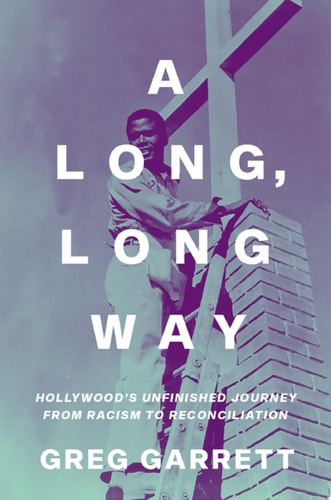
A Long, Long Way: Hollywood's Unfinished Journey from Racism to Reconciliation
0
0
As an Amazon Associate and affiliate partner, Menrva Books earns from qualifying purchases. Learn more
Author Description
From the beginning, American cinema has been both a powerful mythmaker and a social critic. D.W. Griffith's Birth of a Nation, arguably the first feature film, shows us just how early in its history cinema had established its influence. In 1915 it was the first movie to be screened at the White House. After the screening, President Woodrow Wilson is rumored to have said, "It's like history writ with lightning. And my only regret is that it is all terribly true." Birth of a Nation famously portrayed the Klu Klux Klan in a favorable light, a portrayal that contributed to the modern resurgence of the group and brought racist depictions of African Americans imported from the minstrel show to the silver screen. Such white fantasies of black American life have played out on our movie screens for the last century. In response, filmmakers of color have created nuanced and indelible portraits of race, as in Ava DuVernay's Selma or Barry Jenkin's Moonlight. Spike Lee's BlacKkKlansman shows us just how far into our culture Birth of a Nation has reached.In this powerful new book, Greg Garrett brings his signature brand of theologically motivated cultural criticism to bear on this history. After more than a century of cinema, he argues, movies have altered our cultural perspectives in the same way that religious narratives have. And in fact, religious traditions offer powerful correctives to our cultural narratives. A Long, Long Way incorporates both cinematic and religious truth-telling to the subject of race and reconciliation. In acknowledging the racist history of America's national art form, Garrett offers the possibility of hope for the future.
Menrva's Summary
THE THESIS
This book investigates how American cinema has functioned as both a purveyor of racial mythology and a potential vehicle for social reconciliation over the last century. Greg Garrett, a professor and cultural critic, utilizes a framework that bridges theological inquiry and film analysis to examine the influence of movies on the American racial consciousness. He argues that while cinema has historically reinforced white supremacist narratives, it also possesses the capacity to offer corrective, truth-telling perspectives that align with religious traditions of justice and hope.
THE SCOPE MAP
What You Will Find
- A historical survey of American film from D.W. Griffith to contemporary directors like Spike Lee and Ava DuVernay.
- A critical framework that applies theological concepts to cinematic storytelling.
- Analysis of how specific films have shaped or challenged public perceptions of race.
Scope Limits
- The text does not provide an exhaustive catalog of every film dealing with race in America.
- The analysis focuses primarily on the intersection of American cultural narratives and religious ethics rather than purely technical film theory.
THE AUTHORITY PERSPECTIVE
Critics and readers note that Garrett provides a accessible yet rigorous examination of the intersection between media and morality. The text is frequently cited for its ability to synthesize complex historical data with theological reflection for a general audience.
Page Count:
251
Publication Date:
2020-01-01
Publisher:
Oxford University Press
ISBN-10:
0190906278
ISBN-13:
9780190906276
Religion
American History
Film History
Ethnic Studies
Motion pictures
Cultural Anthropology
Race Relations
Community Tags
Similar Books

![A Jonathan Edwards Reader [JONATHAN EDWARDS READER] [Paperback]](https://storage.googleapis.com/menrva_img_storage/covers/9780030009389.jpg)