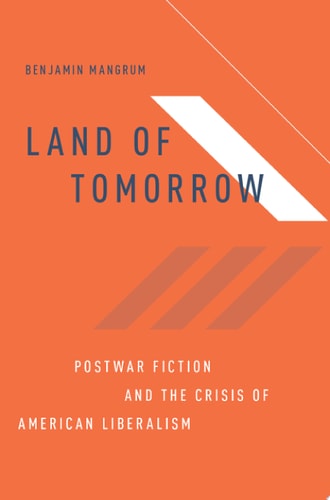
Land of Tomorrow
0
0
As an Amazon Associate and affiliate partner, Menrva Books earns from qualifying purchases. Learn more
Author Description
American Liberalism After The Second World War Turned Against The Legacies Of The New Deal Era. Rather Than Extending The Reforms Of The 1930s, Many Expressions Of Postwar Liberal Thought Recast Organizational Politics As Enfeebling, Alienating, Or Tyrannical. Land Of Tomorrow Examines The Ideas And Cultural Sensibilities That Caused This Radical Shift In The Tenor Of American Liberalism. To Account For These Changes In American Liberal Sentiment, Benjamin Mangrum Looks To Some Of The Most Influential Writers, Critics, And Intellectuals Of The Postwar Decades-including Ralph Ellison, Vladimir Nabokov, Lionel Trilling, Flannery O'connor, And Saul Bellow, As Well As The American Reception Of Friedrich Nietzsche, Sigmund Freud, Franz Kafka, And Many Other European Thinkers. By Revising Established Accounts Of This Body Of Cultural Work, Mangrum Charts The Legitimization Of New Political Sensibilities Within The Nation's Intellectual Life. These Sensibilities Opposed A Social Democratic Order And Unleashed A New Kind Of Liberalism, One Which Centered On Ideas About Authenticity, Alienation, Self-management, Psychological Templates For Societal Problems, And Private Judgments Of Value. This Confluence Of Literary, Intellectual, And Political History Gives Us A Window Onto The Basic Assumptions And Key Conceptual Terrain Of Liberal Thought After 1945. Land Of Tomorrow Thus Offers A Provocative Cultural Prehistory Of Political Thinking's Forms That Remain With Us Today.
Menrva's Summary
THE THESIS
This book investigates the ideological and cultural shifts that caused postwar American liberalism to abandon the social democratic foundations of the New Deal in favor of individualistic and psychological frameworks. Benjamin Mangrum, an academic scholar, utilizes a synthesis of literary criticism, intellectual history, and political theory to analyze how influential writers and thinkers of the mid-20th century redefined the liberal project. By examining the works of figures such as Ralph Ellison, Lionel Trilling, and Saul Bellow, alongside the American reception of European philosophers like Nietzsche and Kafka, the author argues that a new liberal sensibility emerged that prioritized personal authenticity and private judgment over collective organizational politics.
THE SCOPE MAP
What You Will Find
- Analysis of the transition from New Deal-era social democracy to postwar individualistic liberalism.
- Examination of the intellectual influence of writers including Vladimir Nabokov, Flannery O'Connor, and Ralph Ellison.
- Exploration of the impact of European thinkers like Sigmund Freud and Franz Kafka on American political thought.
- A framework for understanding how concepts like alienation and self-management replaced structural political reform.
Scope Limits
- The study focuses primarily on intellectual and literary history rather than grassroots political movements or electoral data.
- The analysis is confined to the period immediately following 1945 through the subsequent decades of the 20th century.
THE AUTHORITY PERSPECTIVE
Scholars and historians recognize this work as a significant contribution to the study of American intellectual history and the evolution of liberal thought. Readers frequently note the academic density of the prose, which is well-suited for students and researchers interested in the intersection of literature and political philosophy.
Page Count:
320
Publication Date:
2018-01-01
Publisher:
Oxford University Press
ISBN-10:
0190909382
ISBN-13:
9780190909383
History
20th Century
Literary Criticism
American Studies
Intellectual History
Community Tags
Similar Books