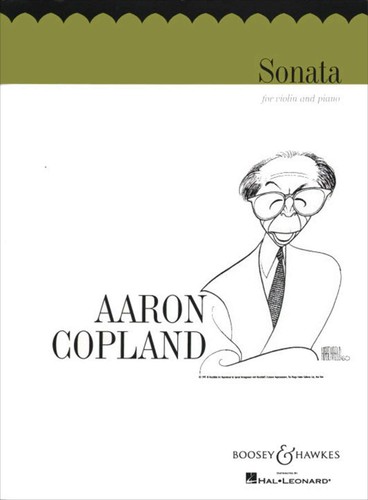
Sonata for Violin and Piano
0
0
As an Amazon Associate and affiliate partner, Menrva Books earns from qualifying purchases. Learn more
Author Description
The work is characterized by an austere, neo-Classical rhetoric which is evident in its lean textures and extended contrapuntal play, including three-part canons in the first two movements and the superimposition of one theme in the violin upon a different two-voice canon in the piano in the finale. While the harmonic language is largely diatonic, the tonal centers unconventionally shift on the turn of a note, lacing a degree of ambiguity into the work. Similarly, the piece frequently moves along like an improvisation, tempi increasing and decreasing at a moment's notice. The first movement features a slow introduction that evolves into a vigorous opening theme. A simple second theme punctuated by plain triads in the piano leads into a more turbulent development that climaxes in a triple-forte passage, followed by a recapitulation and a brief coda. The central Lento is more an interlude than a movement per se, while the finale proceeds in binary form. The first half of the finale, derived in varying degrees from previous material in the sonata, proceeds from a scherzo-like theme to a slower, more intimate melody, to a fast spirited tune, to a short folk-like interlude, and finally, a poignant closing theme. The second half more or less recapitulates the first half, with the addition of a somber coda that is actually a brief reprise of the opening of the first movement. - Brian Wise at allmusic.com Composer David Diamond recalls playing the Sonata for violin and piano with the composer in Copland's New York loft at the time of the work's composition. Diamond said, "I advised him to use harmonics in the last movement." The Sonata is in the usual three movements, the last two to be played without pause. Following the premiere in 1944 for which Copland was the pianist, Virgil Thomson called the Sonata "one of its author's most satisfying pieces. It has a quality at once of calm elevation and of buoyancy that is characteristic of Copland and irresistibly touching." - Vi
Menrva's Summary
THE THESIS
The Sonata for Violin and Piano explores a neo-Classical rhetoric through lean textures and contrapuntal play. Aaron Copland's work is characterized by its austere style, featuring three-part canons and thematic superimposition. While largely diatonic, the harmonic language introduces ambiguity through unconventional tonal shifts and improvisational pacing. The first movement begins with a slow introduction leading to a vigorous theme, followed by a simple second theme, a turbulent development, and a recapitulation. The central Lento acts as an interlude, and the finale, in binary form, moves through various thematic sections before concluding with a reprise of the first movement's opening.
THE SCOPE MAP
- Analysis of the Sonata for Violin and Piano by Aaron Copland.
- Detailed examination of its neo-Classical rhetoric, lean textures, and contrapuntal techniques.
- Discussion of three-part canons in the first two movements.
- Explanation of thematic superimposition in the finale.
- Exploration of the harmonic language, including diatonicism and unconventional tonal shifts.
- Description of the improvisational pacing and shifting tempi.
- Movement-by-movement breakdown: first movement's introduction, themes, development, and coda; central Lento as an interlude; finale's binary form and thematic variations.
- Inclusion of composer David Diamond's anecdote and Virgil Thomson's critical reception.
THE AUTHORITY PERSPECTIVE
The Sonata for Violin and Piano is regarded as one of Copland's most satisfying pieces, noted for its characteristic calm elevation and buoyancy. Critics have highlighted its austere, neo-Classical rhetoric, evident in its lean textures and intricate contrapuntal passages. The work's harmonic language, while largely diatonic, incorporates ambiguity through unconventional tonal shifts and improvisational pacing. The structure, with its distinct movements and thematic development, has been analyzed for its sophisticated composition.
Page Count:
0
Publication Date:
1989-01-01
ISBN-10:
3999780258
ISBN-13:
0073999780253
Music
Non-Fiction
Music theory
Composition
Community Tags
Similar Books