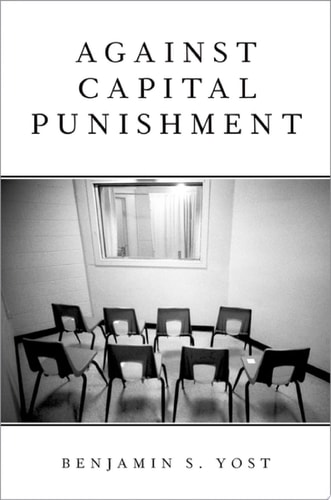
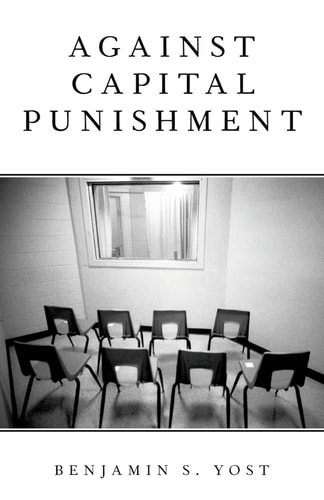
Against Capital Punishment
0
0
As an Amazon Associate and affiliate partner, Menrva Books earns from qualifying purchases. Learn more
Author Description
The specter of procedural injustice motivates many popular and scholarly objections to capital punishment. So-called proceduralist arguments against the death penalty are attractive to death penalty abolitionists because they sidestep the controversies that bedevil moral critiques of execution. Proceduralists do not shoulder the burden of demonstrating that heinous murderers deserve a punishment less than death. However, proceduralist arguments often pay insufficient attention to the importance of punishment; many imply the highly contentious claim that no type of criminal sanction is legitimate.In Against Capital Punishment, Benjamin S. Yost revitalizes the core of proceduralism both by examining the connection between procedural injustice and the impermissibility of capital punishment and by offering a comprehensive argument of his own which confronts proceduralism's most significant shortcomings. Yost is the first author to develop and defend the irrevocability argument against capital punishment, demonstrating that the irremediability of execution renders capital punishment impermissible. His contention is not that the act of execution is immoral, but rather that the possibility of irrevocable mistakes precludes the just administration of the death penalty. Shoring up proceduralist arguments for the abolition of the death penalty, Against Capital Punishment carries with it implications not only for the continued use of the death penalty in the criminal justice system, but also for the structure and integrity of the system as a whole.
Menrva's Summary
THE THESIS
Benjamin S. Yost investigates whether the inherent risk of irrevocable error in the judicial process renders the administration of capital punishment fundamentally impermissible. Yost, a scholar of political and legal philosophy, critiques existing proceduralist arguments that often fail to account for the necessity of criminal sanctions. He proposes a refined framework centered on the 'irrevocability argument,' which posits that because the state cannot rectify a wrongful execution, the death penalty cannot be administered justly within any legal system.
THE SCOPE MAP
What You Will Find
- A critical analysis of proceduralist objections to the death penalty
- The development of the irrevocability argument as a primary legal and moral barrier
- An examination of the structural integrity of the criminal justice system
- A philosophical defense of why execution differs from other forms of criminal sanction
Scope Limits
- The book does not focus on the moral status of the act of execution itself
- It does not provide a comprehensive history of capital punishment legislation
THE AUTHORITY PERSPECTIVE
Scholars and legal theorists identify this work as a significant contribution to the philosophy of punishment, particularly for its focus on the intersection of procedural justice and state-sanctioned death. Readers frequently note the academic density of the prose, which is intended for audiences familiar with legal and ethical discourse.
Page Count:
292
Publication Date:
2019-01-01
Publisher:
Oxford University Press
ISBN-10:
0190901187
ISBN-13:
9780190901189
Philosophy
Law
Professional Career & Trade
Social Issues
Ethics
Jurisprudence
Community Tags
Other Editions(3)
Similar Books