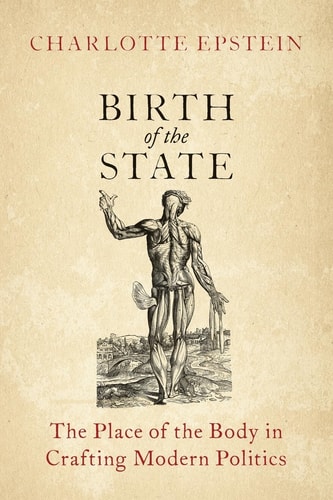
Birth of the State: The Place of the Body in Crafting Modern Politics
0
0
As an Amazon Associate and affiliate partner, Menrva Books earns from qualifying purchases. Learn more
Author Description
This book uses the body to peel back the layers of time and taken-for-granted ideas about the two defining political forms of modernity, the state and the subject of rights. It traces, under the lens of the body, how the state and the subject mutually constituted each other all the way down, by going all the way back, to their original crafting in the seventeenth century. It considers two revolutions. The first, scientific, threw humanity out of the centre of the universe, and transformed the very meanings of matter, space, and the body; while the second, legal and political, re-established humans as the centre-point of the framework of modern rights.The book analyses the fundamental rights to security, liberty, and property respectively as the initial knots where the state-subject relation was first sealed. It develops three arguments, that the body served to naturalise security; to individualise liberty; and to privatise property. Covering a wide range of materials--from early modern Dutch painting, to the canon of English political thought, the Anglo-Scottish legal struggles of naturalization, and medical and religious practices--it shows both how the body has operated as history's great naturaliser, and how it can be mobilised instead as a critical tool that lays bare the deeply racialised and gendered constructions that made the state and the subject of rights. The book returns to the origins of constructivist and constitutive theorising to reclaim their radical and critical potential.
Menrva's Summary
THE THESIS
This book investigates how the human body functions as a foundational element in the historical construction of the modern state and the subject of rights. Charlotte Epstein, a scholar in international relations and political theory, utilizes a constructivist framework to examine the seventeenth-century origins of political modernity. She argues that the state and the individual subject were mutually constituted through the conceptualization of the body, which served to naturalize security, individualize liberty, and privatize property.
THE SCOPE MAP
What You Will Find
- Analysis of the seventeenth-century scientific and legal revolutions.
- Examination of the rights to security, liberty, and property as foundational knots of state-subject relations.
- Interdisciplinary evidence including early modern Dutch painting, English political philosophy, and Anglo-Scottish legal records.
Scope Limits
- The text focuses primarily on Western political thought and European historical contexts.
- It does not provide a comprehensive history of the state beyond its seventeenth-century formative period.
THE AUTHORITY PERSPECTIVE
Scholars in political theory recognize this work for its rigorous application of constructivist methodology to historical political development. Readers frequently note the academic density of the prose, which is intended for an audience familiar with critical theory and political philosophy.
Page Count:
352
Publication Date:
2020-12-18
Publisher:
Oxford University Press
ISBN-10:
0190917636
ISBN-13:
9780190917630
History
Philosophy
Political Philosophy
Gender Studies
Sociology
Critical Theory
Community Tags
Similar Books