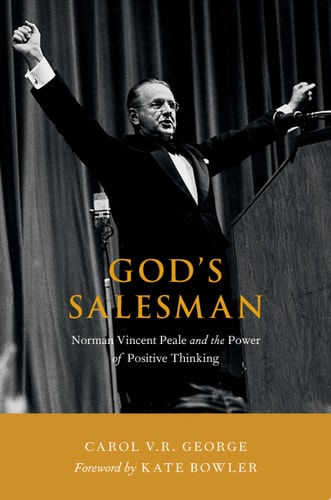
God's Salesman: Norman Vincent Peale and the Power of Positive Thinking
0
0
As an Amazon Associate and affiliate partner, Menrva Books earns from qualifying purchases. Learn more
Author Description
Norman Vincent Peale is one of the most influential religious figures in recent American history. Preacher, author, editor, public personality, and religious innovator, he sparked the post-War revival of religion with his 1952 bestseller, The Power of Positive Thinking. His message of Practical Christianity helped drive the religious revival of the 1950s, putting him at the forefront of the human potential movement. And with the inspirational magazine he founded, Guideposts, Peale and his message of positive thinking affected the lives of a vast public in the United States and around the world. In God's Salesman, Carol V.R. George utilizes interviews with Peale himself as well as exclusive access to his manuscript collection to provide the first full-length scholarly account of Peale and his highly visible career. George explores the evolution of Peale's message of Practical Christianity, the belief that when positive thinking was combined with affirmative prayer, the technique of "imaging," and purposeful action, the result was a changed life. It was a message with special appeal for many in the post-War middle class struggling to rebuild their lives and have a voice in society. George examines the formative influences on Peale's thinking, especially his devout Methodist parents, his early exposure to and then enthusiastic acceptance of Ralph Waldo Emerson and William James, and his almost instinctive attraction to evangelicalism. The latter connection found him new friends within the National Association of Evangelicals and a passing partnership during the fifties revival with Billy Graham. George also traces the tremendous reception accorded Peale's controversial signature work, The Power of Positive Thinking, a response that helped "Pealeism" penetrate the mainstream culture. At the height of his popularity Peale was reaching over 30 million people weekly through radio, television, and the written word. And despite continued criticism from liberal church.
Menrva's Summary
THE THESIS
How did Norman Vincent Peale transform American religious life by synthesizing traditional Christianity with the burgeoning human potential movement? Carol V. R. George, a scholar of American religious history, examines the life and career of Norman Vincent Peale to understand his role in the post-War religious revival. By analyzing Peale's personal manuscripts and conducting direct interviews, George reconstructs the development of 'Practical Christianity' and its integration into the American middle-class experience. The book argues that Peale's unique blend of affirmative prayer, imaging, and purposeful action provided a psychological framework that resonated deeply with a society seeking stability and personal agency.
THE SCOPE MAP
What You Will Find
- Analysis of the post-War American religious revival and the rise of the human potential movement.
- Examination of Peale's intellectual influences, including Ralph Waldo Emerson and William James.
- Documentation of the creation and impact of the magazine Guideposts.
- Historical context regarding Peale's interactions with the National Association of Evangelicals and Billy Graham.
Scope Limits
- The text focuses primarily on Peale's public career and theological evolution rather than an exhaustive psychological profile of his private life.
- The narrative centers on the American context, with limited exploration of his global influence beyond the United States.
THE AUTHORITY PERSPECTIVE
Scholars and historians recognize this work as the definitive academic biography of Norman Vincent Peale, valued for its unprecedented access to primary source materials. Readers frequently note the balanced approach the author takes in documenting both Peale's immense cultural popularity and the theological criticisms leveled against his work by liberal church leaders.
Page Count:
328
Publication Date:
2019-01-01
Publisher:
Oxford University Press
ISBN-10:
0190914793
ISBN-13:
9780190914790
History
Religion
Biography
Reformed Church
Sociology
American History
Cultural History
Christianity
Peace Of Mind
Community Tags
Other Editions(2)
Similar Books






Reader Comments
Share Your Thoughts
No comments yet. Be the first to share your thoughts!