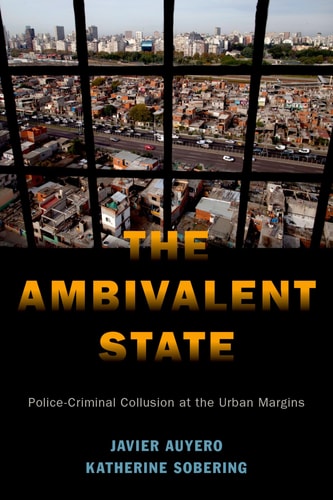
The Ambivalent State: Police-criminal Collusion At The Urban Margins
0
0
As an Amazon Associate and affiliate partner, Menrva Books earns from qualifying purchases. Learn more
Author Description
Over The Last Few Decades, Debates About Policing In Poor Urban Areas Have Shifted Analysing The State's Neglect And Abandonment To Documenting Its Harsh Interventions And Punishing Presence. Most Of This Research Has Focused On The Overt Actions And Inactions. Yet We Know Very Little About The Covert World Of State Action That Is Hidden From Public View. The Ambivalent State Offers An Unprecedented Look Into The Clandestine Relationships Between Cops And Drug Dealers In Argentina. Drawing On A Unique Combination Of Ethnographic Research And Documentary Evidence, Including Hundreds Of Pages Of Wiretapped Phone Conversations, Sociologists Javier Auyero And Katherine Sobering Analyse The Inner-workings Of Police-criminal Collusion And Its Connections To Drug Markets And The Depacification Of Daily Life. Through Rich Descriptions Of The Actual Clandestine Interactions Between Drug Dealers And Police, They Argue That An Up-close Examination Of Covert State Action Exposes The Workings Of An Ambivalent State: One That Enforces The Rule Of Law While At The Same Time And In The Same Place Functions As A Partner To What It Defines As Criminal Behaviour. The Ambivalent State Develops A Political Sociology Of Violence That Focuses Not Only On Takes Place In Police Stations, Criminal Courts, And Poor Neighbourhoods, But Also The Clandestine Actions And Interactions Of Police Agents, Judges, And Politicians That Structure Daily Life At The Urban Margins. By Way Of Empirical Demonstration, The Book Makes An Urgent Call For Scholars To Incorporate Clandestine Action Into Explanations Of The State.
Menrva's Summary
THE THESIS
How do clandestine relationships between law enforcement and criminal actors shape the function of the state in marginalized urban environments? Sociologists Javier Auyero and Katherine Sobering utilize extensive ethnographic fieldwork and primary source documentation, including wiretapped phone records, to examine the mechanisms of police-criminal collusion in Argentina. The authors argue that the state operates through an inherent ambivalence, simultaneously enforcing legal mandates while actively participating in illicit markets to maintain control and order at the urban margins.
THE SCOPE MAP
What You Will Find
- Analysis of the 'arreglo' or informal agreements between police and drug dealers.
- Examination of the connection between state collusion and the escalation of local violence.
- Qualitative data derived from hundreds of pages of intercepted police-criminal communications.
- A political sociology framework for understanding state-sanctioned illicit activity.
Scope Limits
- The research is geographically restricted to specific urban contexts in Argentina.
- The study focuses primarily on the police-drug dealer nexus rather than broader national policy or international drug trafficking networks.
THE AUTHORITY PERSPECTIVE
Scholars in the fields of political sociology and criminology identify this work as a significant contribution to the study of state-level corruption and urban violence. Readers frequently note the academic rigor of the ethnographic approach and the clarity with which the authors document the complex, often contradictory, nature of state power.
Page Count:
0
Publication Date:
1900-01-01
Publisher:
Oxford University Press,
ISBN-10:
0190915579
ISBN-13:
9780190915575
Administration of Justice
Sociology
Marginality Social
Urban Studies
American Studies
Criminology
Ethnography
Police
Community Tags
Similar Books