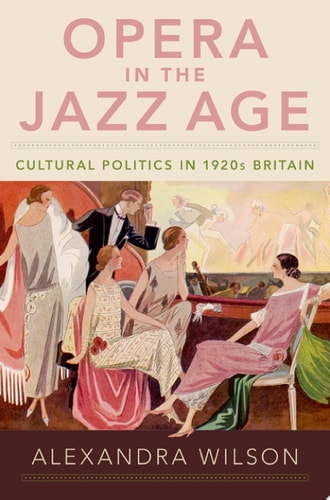
Opera in the Jazz Age: Cultural Politics in 1920s Britain
0
0
As an Amazon Associate and affiliate partner, Menrva Books earns from qualifying purchases. Learn more
Author Description
Jazz, the Charleston, nightclubs, cocktails, cinema, and musical theatre: 1920s British nightlife was vibrant and exhilarating. But where did opera fit into this fashionable new entertainment world? Opera in the Jazz Age: Cultural Politics in 1920s Britain explores the interaction between opera and popular culture at a key historical moment when there was a growing imperative to categorize art forms as "highbrow," "middlebrow," or "lowbrow." Literary studies of the so-called "battle of the brows" have been numerous, but this is the first book to consider the place of opera in interwar debates about high and low culture. This study by Alexandra Wilson argues that opera was extremely difficult to pigeonhole: although some contemporary commentators believed it to be too highbrow, others thought it not highbrow enough. Opera in the Jazz Age paints a lively and engaging picture of 1920s operatic culture, and introduces a charismatic cast of early twentieth-century critics, conductors, and celebrity singers. Opera was performed during this period to socially mixed audiences in a variety of spaces beyond the conventional opera house: music halls, cinemas, cafés and schools. Performance and production standards were not always high - often quite the reverse - but opera-going was evidently great fun. Office boys whistled operatic tunes they had heard on the gramophone and there was a genuine sense that opera was for everyone. In this provocative and timely study, Wilson considers how the opera debate of the 1920s continues to shape the ways in which we discuss the art form, and draws connections between the battle of the brows and present-day discussions about elitism. The book makes a major contribution to our understanding of the cultural politics of twentieth-century Britain and is essential reading for anybody interested in the history of opera, the battle of the brows, or simply the perennially fascinating decade that was the 1920s.
Menrva's Summary
THE THESIS
This book investigates how opera functioned within the cultural hierarchy of 1920s Britain, specifically addressing the tension between highbrow and lowbrow categorization. Alexandra Wilson, a scholar of music history, utilizes archival research, contemporary criticism, and performance records to argue that opera occupied a contested space that defied simple classification. She examines how the art form navigated the emergence of jazz, cinema, and popular entertainment to maintain its relevance in a rapidly changing social landscape.
THE SCOPE MAP
What You Will Find
- Analysis of the 'battle of the brows' within the context of interwar British society.
- Examination of non-traditional performance spaces including music halls, cinemas, and schools.
- Profiles of influential critics, conductors, and singers of the era.
Scope Limits
- The study is geographically restricted to Britain during the 1920s.
- It does not provide a comprehensive technical history of operatic composition during this decade.
THE AUTHORITY PERSPECTIVE
Scholars and historians recognize this work as a significant contribution to the study of twentieth-century cultural politics and the sociology of music. Readers frequently note the balance between rigorous academic research and the accessible, engaging prose style used to describe the era's vibrant nightlife.
Page Count:
253
Publication Date:
2018-01-01
Publisher:
Oxford University Press
ISBN-10:
0190912685
ISBN-13:
9780190912680
History
British History
Music
Music History
Opera
Music British
20th Century
Humanities
Community Tags
Similar Books