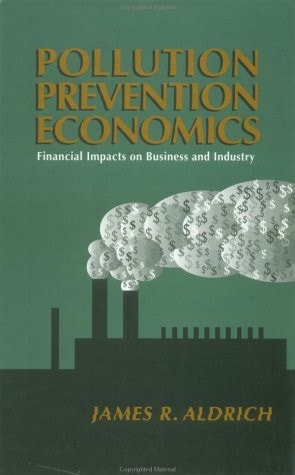
Pollution Prevention Economics: Financial Impacts on Business and Industry
0
0
As an Amazon Associate and affiliate partner, Menrva Books earns from qualifying purchases. Learn more
Author Description
Environmental managers often find it difficult to assess investments in pollution prevention programs or equipment. This book provides basic economic and accounting principles to sharpen the skills that both small and large businesses can use to evaluate and financially justify investment in pollution prevention. Environmental engineers and managers will gain practical information on how to allocate resources and obtain investment capital from outside sources. Extensive use is made of current environmental issues through examples and case studies to illustrate and explain how economics impact the bottom line. Strengths and weaknesses of standard cost/benefit measures such as life-cycle costing net present value, payback period, and others are clearly spelled out. Time-saving ways to perform analyses are included.
Menrva's Summary
THE THESIS
This book investigates the core challenge of quantifying the financial viability of environmental initiatives within corporate and industrial frameworks. Author James R. Aldrich provides environmental managers and engineers with a structured approach to applying economic and accounting principles to pollution prevention projects. By bridging the gap between technical environmental requirements and financial decision-making, the text offers a methodology for justifying capital expenditures to stakeholders and securing necessary funding.
THE SCOPE MAP
What You Will Find
- Financial evaluation metrics including net present value and payback period
- Strategies for resource allocation and securing external investment capital
- Practical case studies applying economic theory to current environmental issues
- Methodologies for life-cycle costing in industrial settings
Scope Limits
- Does not cover specific environmental engineering technologies or chemical processes
- Does not provide legal or regulatory compliance advice beyond financial justification
THE AUTHORITY PERSPECTIVE
Professionals in the environmental management sector frequently utilize this text as a practical reference for translating sustainability goals into fiscal language. Experts highlight the book's utility in providing a standardized framework for cost-benefit analysis that is accessible to both small business owners and corporate managers.
Page Count:
192
Publication Date:
1995-12-01
Publisher:
McGraw-Hill
ISBN-10:
0070009937
ISBN-13:
9780070009936
Economics
Business
Sustainability
New Used & Rental Textbooks
Economics
Community Tags
Similar Books