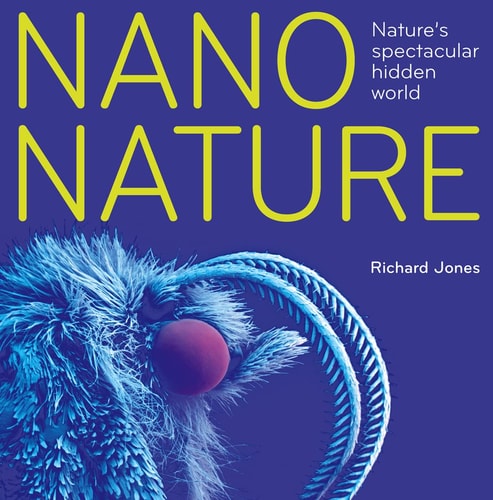
Nano Nature: Nature's Spectacular Hidden World
0
0
As an Amazon Associate and affiliate partner, Menrva Books earns from qualifying purchases. Learn more
Author Description
An exploration of nature's hidden beauties, as revealed by the scanning electron microscope. Nature is renowned for its staggering beauty. But it conceals a hidden world more stunning than anything we can see with the naked eye, a world that can only be viewed through a scanning electron microscope. At the furthest reaches of human technological achievement, this powerful microscope can magnify up to an astounding 200,000 times, producing images that unveil a world of unimaginable beauty and compelling complexity. More surreal than any works of art, Nano Nature brings these images out of the high-tech science laboratory and into the public domain, revealing a wealth of extraordinary patterns and improbable structures. The scales of a moth appear as delicately fluted leaves, individual bristles on a caterpillar's face are as distinct as trees in a forest, arrow-headed hairs on a carpet beetle larva look like spears in a warrior army. Combining spectacular imagery with fascinating narrative, this book uncovers an amazing world beyond imagination, giving us a unique glimpse into the hidden complexities of nature in all its glory.
Menrva's Summary
THE THESIS
This work investigates the hidden structural complexities of the natural world that remain invisible to the human eye, utilizing the scanning electron microscope as a primary analytical tool. Richard D. P. Jones bridges the gap between high-tech laboratory imaging and public accessibility, presenting a collection of magnified biological specimens. The book argues that the microscopic architecture of flora and fauna exhibits intricate patterns and geometric precision that rival human-made art and engineering. By documenting these structures at magnifications up to 200,000 times, the author provides a visual and descriptive framework for understanding the fundamental design of organic life.
THE SCOPE MAP
What You Will Find
- High-resolution scanning electron microscope imagery of insects, plants, and organic materials.
- Comparative analysis of microscopic biological structures against macroscopic patterns found in nature.
- Detailed visual documentation of insect anatomy, including scales, bristles, and larval features.
- An examination of the intersection between biological function and aesthetic complexity at the nano-scale.
THE AUTHORITY PERSPECTIVE
The book serves as a technical yet accessible visual survey of biological morphology, emphasizing the utility of electron microscopy in natural history documentation. Its focus on the structural aesthetics of the microscopic world provides a clear, descriptive resource for readers interested in the intersection of science and visual art.
Page Count:
208
Publication Date:
2009-02-01
Publisher:
Collins
ISBN-10:
000727842X
ISBN-13:
9780007278428
Science
Photography
Nature
Natural History
Microscopy
Biology
Science & Math
NATURE Ecology
Community Tags
Similar Books