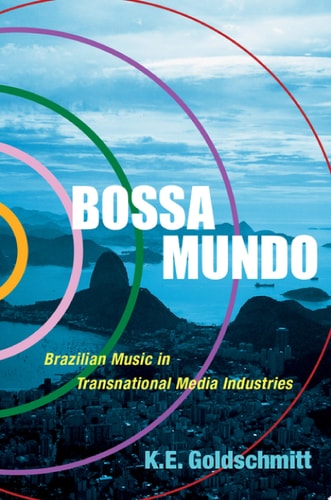
Bossa Mundo: Brazilian Music in Transnational Media Industries
0
0
As an Amazon Associate and affiliate partner, Menrva Books earns from qualifying purchases. Learn more
Author Description
Brazilian music has been central to Brazil's national brand in the U.S. and U.K. since the early 1960s. From bossa nova in 1960s jazz and film, through the 1970s fusion and funk scenes, the world music boom of the late 1980s and the bossa nova remix revival at the turn of the millennium, and on to Brazilian musical distribution and branding in the streaming music era, Bossa Mundo: Brazilian Music in Transnational Media Industries focuses on watershed moments of musical breakthrough, exploring what the music may have represented in a particular historical moment alongside its deeper cultural impact. Through a discussion of the political meaning of mass-mediated music, author K. E. Goldschmitt argues for a shift in scholarly focus--from viewing music as simply a representation of Otherness to taking into account the broader media environment where listeners and intermediaries often have conflicting priorities. Goldschmitt demonstrates that the mediation of Brazilian music in an increasingly crowded transnational marketplace has lasting consequences for the creative output celebrated by Brazil. Like other culturally rich countries in Latin America--such as Cuba, Mexico, and Argentina--Brazil has captured the imagination of people in many parts of the world through its music, driving tourism and international financial investment, while increasing the country's prominence on the world stage Nevertheless, stereotypes of Brazilian music persist, especially those that valorize racial difference. Featuring interviews with key figures in the transnational circulation of Brazilian music, and in-depth discussions of well-known Brazilian musicians alongside artists who redefine what it means to be a Brazilian musician in the twenty-first century, Bossa Mundo shows the pernicious effects of branding racial diversity on musicians and audiences alike.
Menrva's Summary
THE THESIS
How does the transnational circulation of Brazilian music within global media industries shape national branding, racial stereotypes, and the creative agency of musicians? Author K.E. Goldschmitt, a scholar of music and media, examines the historical trajectory of Brazilian music from the 1960s to the contemporary streaming era. The book argues that the commodification of Brazilian sound often relies on reductive tropes of racial difference, which complicates the creative autonomy of artists operating within a competitive global marketplace. By analyzing the intersection of political economy and cultural production, Goldschmitt provides a framework for understanding how music functions as both a tool for national promotion and a site of persistent stereotyping.
THE SCOPE MAP
What You Will Find
- Historical analysis of Brazilian music trends including bossa nova, fusion, funk, and the world music boom.
- Examination of the streaming era's impact on musical distribution and branding.
- Primary source interviews with key figures involved in the transnational circulation of Brazilian music.
- Case studies of both iconic and contemporary artists redefining the Brazilian musical identity.
Scope Limits
- The text does not provide a comprehensive discography or exhaustive history of every Brazilian musical genre.
- The analysis focuses primarily on the transnational media industry rather than domestic Brazilian music consumption patterns.
THE AUTHORITY PERSPECTIVE
Scholars and musicologists recognize this work as a significant contribution to the study of how national identity is mediated through global commercial channels. Readers frequently note the academic rigor and the depth of the author's research into the political economy of the music industry.
Page Count:
258
Publication Date:
2019-01-01
Publisher:
Oxford University Press
ISBN-10:
0190923555
ISBN-13:
9780190923556
Music
American Studies
Humanities
Globalization
Jazz
Media Studies
Latin
Cultural Anthropology
Community Tags
Other Editions(2)
Similar Books











Reader Comments
Share Your Thoughts
No comments yet. Be the first to share your thoughts!