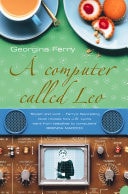
A Computer Called LEO: Lyons Tea Shops and the World’s First Office Computer
0
0
As an Amazon Associate and affiliate partner, Menrva Books earns from qualifying purchases. Learn more
Author Description
The eccentric story of one of the most bizarre marriages in the history of British business: the invention of the world's first office computer and the Lyons Teashop.The Lyons teashops were one of the great British institutions, providing a cup of tea and a penny bun through the depression and the war, though to the 1970s. Yet Lyons also has a more surprising claim to history.In the 1930s John Simmons, a young maths graduate in charge of the clerks' offices, had a dream: to build a machine that would automate the millions of tedious transactions and process them in as little time as possible. Simmons' quest for the first office computer – the Lyons Electronic Office – would take 20 years and involve some of the most brilliant young minds in Britain.Interwoven with the story of creating LEO is the story of early computing, from the Difference Engine of Charles Babbage to the codecracking computers at Bletchley Park and the instantly obsolescent ENIAC in the US. It is also the story of post war British computer business: why did it lose the initiative? Why did the US succeed while British design was often superior?
Menrva's Summary
THE THESIS
This book investigates how a British catering company, Lyons, successfully pioneered the world's first office computer, LEO, and why Britain ultimately lost its early lead in the global computing industry. Georgina Ferry, a science writer and historian, utilizes archival records and personal accounts to trace the development of the Lyons Electronic Office from a visionary idea in the 1930s to its operational reality in the post-war era. The narrative examines the intersection of corporate culture, mathematical innovation, and the broader technological landscape of the mid-twentieth century.
THE SCOPE MAP
What You Will Find
- The evolution of office automation from manual clerical work to electronic processing.
- A comparative analysis of British and American computer development strategies.
- Historical context regarding the influence of Babbage’s Difference Engine and Bletchley Park codebreaking.
- Analysis of the corporate decision-making processes that led to the eventual decline of British computing dominance.
THE AUTHORITY PERSPECTIVE
This work provides a detailed and well-researched account of a pivotal moment in computing history that is often overshadowed by American narratives. The text serves as a scholarly yet accessible examination of the industrial and social factors that shaped early information technology.
Page Count:
256
Publication Date:
2012-10-25
Publisher:
HarperCollins Publishers
ISBN-10:
0007392842
ISBN-13:
9780007392841
Biography
Business
History
computing
Transportation
British History
20th Century
Great Britain
Graphics & Design
Technology & Engineering
Aviation & Space
Inventions
Military
Computers & Technology
Business History
Cad-cam
Business Economics
Aviation
Europe
Technology
Desktop Applications
Computers
Industries
Community Tags
Similar Books