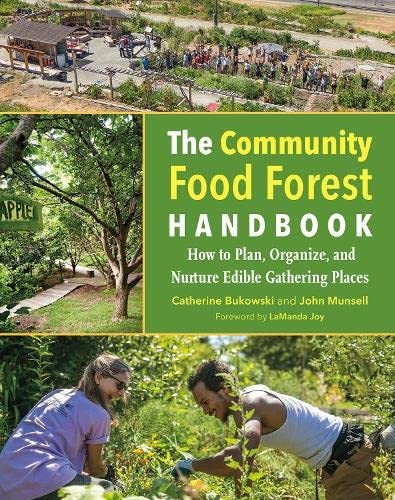
The Community Food Forest Handbook
0
0
As an Amazon Associate and affiliate partner, Menrva Books earns from qualifying purchases. Learn more
Author Description
Fueled by the popularity of permaculture and agroecology, community food forests are capturing the imaginations of people in neighborhoods, towns, and cities across the United States. Along with community gardens and farmers markets, community food forests are an avenue toward creating access to nutritious food and promoting environmental sustainability where we live. Interest in installing them in public spaces is on the rise. People are the most vital component of community food forests, but while we know more than ever about how to design food forests, the ways in which to best organize and lead groups of people involved with these projects has received relatively little attention. In The Community Food Forest Handbook, Catherine Bukowski and John Munsell dive into the civic aspects of community food forests, drawing on observations, group meetings, and interviews at over 20 projects across the country and their own experience creating and managing a food forest. They combine the stories and strategies gathered during their research with concepts of community development and project management to outline steps for creating lasting public food forests that positively impact communities. Rather than rehash food forest design, which classic books such as Forest Gardening and Edible Forest Gardens address in great detail, The Community Food Forest Handbook uses systems thinking and draws on social change theory to focus on how to work with diverse groups of people when conceiving of, designing, and implementing a community food forest. To find practical ground, the authors use management phases to highlight the ebb and flow of community capitals from a project s inception to its completion. They also explore examples of positive feedbacks that are often unexpected but offer avenues for enhancing the success of a community food forest. The Community Food Forest Handbook provides readers with helpful ideas for building and sustaining momentum, working with diverse pub
Menrva's Summary
THE THESIS
This handbook addresses the organizational and leadership challenges inherent in establishing and sustaining community food forests. The authors, drawing on extensive research and practical experience, focus on the civic aspects of these projects, moving beyond design principles to explore how to effectively organize and lead diverse groups of people. The book utilizes systems thinking and social change theory to guide readers through the process of creating lasting public food forests that benefit their communities, highlighting the ebb and flow of community resources through distinct management phases.
THE SCOPE MAP
- Strategies for organizing and leading community food forest projects.
- Application of systems thinking and social change theory to community development.
- Analysis of observations, group meetings, and interviews from over 20 projects across the United States.
- Guidance on managing community capitals from project inception to completion.
- Exploration of positive feedback loops for enhancing project success.
- Focus on the civic and social aspects of food forest creation, rather than design.
THE AUTHORITY PERSPECTIVE
The Community Food Forest Handbook is positioned as a practical guide for those interested in establishing and managing community food forests, a growing trend fueled by permaculture and agroecology. It aims to fill a gap in existing literature by focusing on the organizational and leadership aspects, which are crucial for project success. The book's approach, integrating community development concepts and project management with real-world examples, suggests it is intended for practitioners, community organizers, and urban planners seeking to foster sustainable food access and environmental stewardship.
Page Count:
257
Publication Date:
2018-01-01
ISBN-10:
160358644X
ISBN-13:
9781603586443
Self-help
Non-Fiction
Sustainability
Agroecology
urban planning
Gardening
Community Development
Community Tags
Similar Books