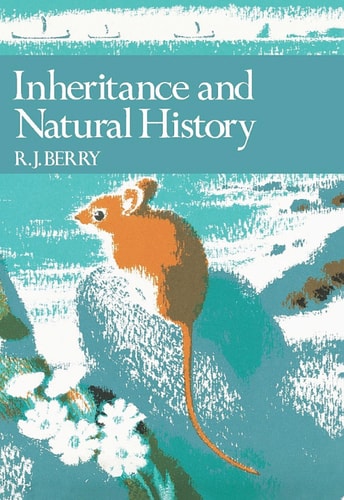
Inheritance and Natural History
0
0
As an Amazon Associate and affiliate partner, Menrva Books earns from qualifying purchases. Learn more
Author Description
Ever wondered why primroses have three sorts of flowers; or about pesticide resistance in rats and mice, mosquitoes and green-fly; antibiotic resistance in disease organisms – all are examples of genetical adjustment, explained in this book.This absorbing book is about genetics as it applies to the world around us. Its main aim is to show the ways in which inherited variation can help to explain the properties of natural populations: the differences between individuals, the extent and mechanism for transmitting characteristics from one generation to another, and the factors which control the frequency of a trait in a local group. It is thus of interest not only to naturalists but also to farmers and gardeners – indeed it is highly relevant to each one of us in the context of modern social planning.Professor Berry's explanations, combining laboratory techniques for the biochemical study of changes in cells, an understanding of modern genetics, and field observations by himself and others, are addressed not just to the earnest student but to all those who wonder why people or organisms differ – why snails are striped; why mice have longer tails in Scotland than in England; why primroses have three sorts of flowers; or about melanic forms of moths, spiders and ladybirds in industrial areas; pesticide resistance in rats and mice, mosquitoes and green-fly; antibiotic resistance in disease organisms – all examples of genetical adjustment.Illustrated with 110 drawings, 12 colour and 19 black and white photographs.
Menrva's Summary
THE THESIS
This work investigates how the principles of genetics and inherited variation dictate the observable characteristics and survival mechanisms of natural populations. Professor R. J. Berry, a distinguished geneticist, synthesizes laboratory biochemical analysis with extensive field observations to bridge the gap between abstract genetic theory and the tangible biological diversity found in the wild. The book argues that understanding these mechanisms is essential for interpreting everything from the physical traits of local fauna to the development of resistance in pests and pathogens.
THE SCOPE MAP
What You Will Find
- Analysis of inherited variation in natural populations including snails, mice, and moths.
- Examination of adaptive responses such as pesticide and antibiotic resistance.
- Integration of biochemical cell study with traditional field naturalism.
- Discussion on the practical implications of genetics for agriculture and social planning.
THE AUTHORITY PERSPECTIVE
The text serves as a comprehensive and accessible entry in the New Naturalist series, balancing technical rigor with clear explanations for the lay reader. Its focus on the intersection of evolutionary biology and observable natural phenomena provides a foundational perspective for students and naturalists alike.
Page Count:
350
Publication Date:
2013-12-12
Publisher:
HarperCollins UK
ISBN-10:
0007406495
ISBN-13:
9780007406494
Science
Natural History
Science
Zoology
Evolution
Botany
Regional
Ecology
Nature
Wildlife
Genetics
Technology & Engineering
Biology
Agriculture
Anthropology
Animals
Social Science
Life sciences
Biological Diversity
Community Tags
Similar Books