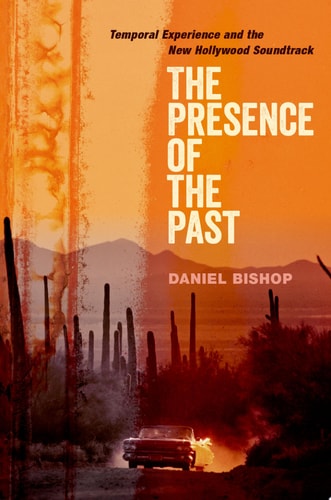
The Presence of the Past: Temporal Experience and the New Hollywood Soundtrack
0
0
As an Amazon Associate and affiliate partner, Menrva Books earns from qualifying purchases. Learn more
Author Description
The Presence of the Past offers a new perspective on Hollywood's "New Wave" as engaged with the vitality of sensory experience and the affective imagination. As author Daniel Bishop shows, the soundtracks of several key films of the New Hollywood Cinema of the late 1960s and 70s cultivated an array of sensibilities regarding the American past. This importance of the past exceeded the New Hollywood's acknowledged use of genre revisionism as a vehicle for timely ideological commentary. There was also a vital tendency in this era to locate the past as an object of imagined phenomenal presence. Although this concept of the past never solidified into a self-conscious discourse, it was nevertheless woven into film culture, readable between the lines of criticism, cultural reception, New Wave aesthetics, and in the aesthetic and industrial transformations of sound design and film music. Bonnie and Clyde (1967), Butch Cassidy and the Sundance Kid (1969), McCabe and Mrs. Miller (1971), The Last Picture Show (1971), American Graffiti (1973), Chinatown (1974), and Badlands (1973) are not only key texts of an exciting era in American popular cinema. They are also mediations upon the presence of the past, an image central to the polarities of visceral energy and ambiguous ephemerality, of utopian dreams and melancholy resignation that characterized this cinema. These sensibilities of pastness engage in diverse ways with myth, nostalgia, paranoia, and existential alienation. They are, however, also united by a concern both with the experiential actuality of the past and with the distances that inevitably separate us from this actuality.
Menrva's Summary
THE THESIS
This book investigates how the soundtracks of New Hollywood Cinema in the late 1960s and 1970s functioned as a mechanism for constructing an imagined, phenomenal presence of the American past. Daniel Bishop, a scholar of media and music, examines how film music and sound design moved beyond simple genre revisionism to evoke complex temporal experiences. By analyzing the interplay between visceral energy and melancholy, the author argues that these soundtracks served as a bridge between the experiential reality of history and the inevitable distance of modern nostalgia.
THE SCOPE MAP
What You Will Find
- Analysis of sound design and musical scoring in seminal films like Bonnie and Clyde, The Last Picture Show, and Chinatown.
- A theoretical framework connecting sensory experience, affective imagination, and historical consciousness.
- Examination of cultural reception and critical discourse surrounding New Hollywood aesthetics.
Scope Limits
- The study focuses primarily on the late 1960s and 1970s, excluding broader historical periods of American cinema.
- The text does not provide a comprehensive technical manual for film scoring, focusing instead on cultural and phenomenological analysis.
THE AUTHORITY PERSPECTIVE
Scholars in film musicology identify this work as a significant contribution to the study of how sound shapes temporal perception in cinema. Readers frequently note the academic density of the prose, which is best suited for those with a background in media theory or film history.
Page Count:
258
Publication Date:
2021-01-01
Publisher:
Oxford University Press
ISBN-10:
0190932716
ISBN-13:
9780190932718
Cinema History
Cultural History
Humanities
Criticism history
Musicology
Music History
American Studies
Film Studies
Sound design
Community Tags
Other Editions(2)
Similar Books