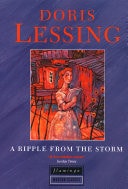
A Ripple from the Storm
0
0
As an Amazon Associate and affiliate partner, Menrva Books earns from qualifying purchases. Learn more
Author Description
The third book in the Nobel Prize for Literature winner’s ‘Children of Violence’ series tracing the life of Martha Quest from her childhood in colonial Africa to old age in post-nuclear Britain.‘“The personal life of a comrade would be arranged so that it interferes as little as possible with work," he said. Martha had not imagined that the "personal talk" with Anton would arise like an item on an agenda; she now felt frivolous because she had been looking forward to something different...’The ‘Children of Violence’ series established Doris Lessing as a major radical writer. In this third volume, Martha, now free of her stultifying marriage to Douglas, is able to pursue the independent life she has wanted for so long. Her deepening involvement with South African revolutionary politics draws her into a world of fierce commitments and passionate idealism. A time of great change, Martha's young womanhood brings not only immense happiness when she embarks on an affair with a fellow party member, but also great sorrow – for the pain of abandoning Caroline, her baby daughter, left at home with Douglas, never diminishes...
Menrva's Summary
THE PULSE
Martha Quest navigates the volatile intersection of personal liberation and radical political commitment in post-war Southern Africa. Having escaped a restrictive marriage, Martha seeks to define her identity through active participation in revolutionary circles. She faces the internal conflict of balancing her intellectual and romantic desires against the rigid expectations of party loyalty and the lingering, painful reality of her decision to leave her daughter behind. The narrative follows her development through a lens of intense social observation, capturing the friction between individual autonomy and collective ideology.
INSIDE THE PAGES
- Exploration of the psychological toll of political activism
- Detailed examination of colonial social structures
- Non-linear progression of personal growth and disillusionment
- Focus on the tension between maternal duty and personal freedom
- Introspective, character-driven narrative style
- Portrayal of the intellectual climate of the mid-20th century
- Examination of the complexities of romantic relationships within political movements
- Realistic depiction of the mundane and the transformative in daily life
THE COLLECTIVE ECHO
This novel is widely regarded as a significant contribution to mid-century literature, noted for its unflinching examination of the female experience within radical political movements. Critics often highlight the author's ability to weave the personal struggles of the protagonist with the broader socio-political shifts of the era. The work is frequently praised for its psychological depth and its refusal to offer easy resolutions to the moral dilemmas faced by its characters. Readers often find the portrayal of Martha's internal conflict regarding her daughter to be a particularly poignant and enduring element of the narrative.
Page Count:
336
Publication Date:
2012-06-21
Publisher:
HarperCollins Publishers
ISBN-10:
0007455550
ISBN-13:
9780007455553
Historical Fiction
Literary Fiction
Romance
20th Century
Action Adventure
Political fiction
Political
Literary
Thrillers
Mashups
Fiction
Coming of Age
Community Tags
Similar Books