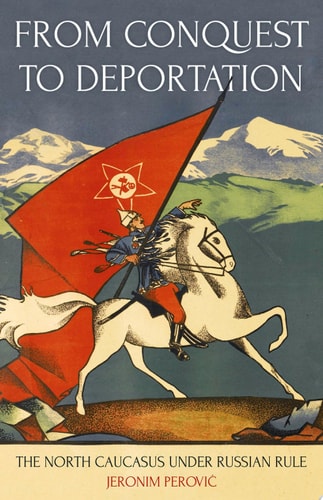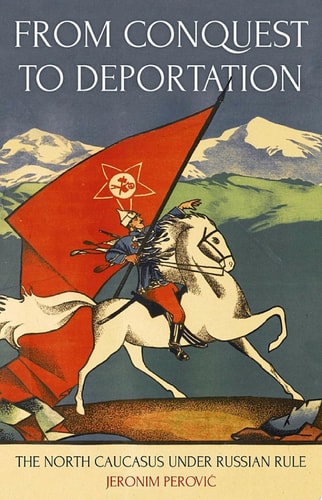
From Conquest to Deportation: The North Caucasus under Russian Rule
0
0
As an Amazon Associate and affiliate partner, Menrva Books earns from qualifying purchases. Learn more
Author Description
This book is about a region on the fringes of empire, which neither Tsarist Russia, nor the Soviet Union, nor in fact the Russian Federation, ever really managed to control. Starting with the nineteenth century, it analyses the state's various strategies to establish its rule over populations highly resilient to change imposed from outside, who frequently resorted to arms to resist interference in their religious practices and beliefs, traditional customs, and ways of life.Jeronim Perovic offers a major contribution to our knowledge of the early Soviet era, a crucial yet overlooked period in this region's troubled history. During the 1920s and 1930s, the various peoples of this predominantly Muslim region came into contact for the first time with a modernising state, demanding not only unconditional loyalty but active participation in the project of 'socialist transformation'. Drawing on unpublished documents from Russian archives, Perovi? investigates the changes wrought by Russian policy and explains why, from Moscow's perspective, these modernization attempts failed, ultimately prompting the Stalinist leadership to forcefully exile the Chechens and other North Caucasians to Central Asia in 1943-4.
Menrva's Summary
THE THESIS
This book investigates the persistent failure of successive Russian states—from the Tsarist era through the Soviet Union—to establish stable control over the North Caucasus. Jeronim Perovic, a scholar specializing in the history of the Caucasus, utilizes previously unpublished archival documents to analyze the friction between Moscow's modernization projects and the region's resilient traditionalist societies. The work argues that the state's inability to integrate these populations led to a cycle of resistance and state-sponsored violence, culminating in the mass deportations of the 1940s.
THE SCOPE MAP
What You Will Find
- Analysis of Russian state-building strategies from the 19th century to the mid-20th century.
- Examination of the 1920s and 1930s socialist transformation efforts in Muslim-majority regions.
- Detailed accounts of the 1943-44 deportations of Chechens and other North Caucasian peoples.
Scope Limits
- The text focuses primarily on the administrative and political relationship between Moscow and the region rather than providing a comprehensive cultural history of individual ethnic groups.
THE AUTHORITY PERSPECTIVE
Scholars recognize this work as a significant contribution to the study of Soviet-era regional policy and the complexities of imperial governance. Readers frequently note the academic density of the prose and the author's meticulous use of primary source material to explain the origins of long-standing regional instability.
Page Count:
492
Publication Date:
2018-01-01
Publisher:
Oxford University Press
ISBN-10:
0190934891
ISBN-13:
9780190934897
History
Soviet Union
Caucasus
Military History
North Caucasus
European History
Colonialism
Russian History
Soviet History
Community Tags
Similar Books