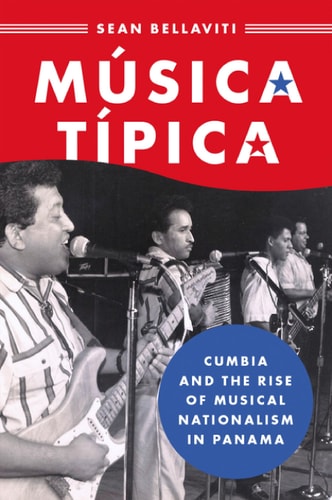
Música Típica: Cumbia and the Rise of Musical Nationalism in Panama
0
0
As an Amazon Associate and affiliate partner, Menrva Books earns from qualifying purchases. Learn more
Author Description
The Panama Canal is a world-famous site central to the global economy, but the social, cultural, and political history of the country along this waterway is little known outside its borders. In Música Típica, author Sean Bellaviti sheds light on a key element of Panamanian culture, namely the story of cumbia or, as Panamanians frequently call it, "música típica," a form of music that enjoys unparalleled popularity throughout Panama. Through extensive archival and ethnographic research, Bellaviti reconstructs a twentieth-century social history that illuminates the crucial role music has played in the formation of national identities in Latin America. Focusing, in particular, on the relationship between cumbia and the rise of populist Panamanian nationalism in the context of U.S. imperialism, Bellaviti argues that this hybrid musical form, which forges links between the urban and rural as well as the modern and traditional, has been essential to the development of a sense of nationhood among Panamanians. With their approaches to musical fusion and their carefully curated performance identities, cumbia musicians have straddled some of the most pronounced schisms in Panamanian society.
Menrva's Summary
THE THESIS
How did the development of cumbia, or música típica, function as a catalyst for Panamanian national identity during the twentieth century? Sean Bellaviti, an ethnomusicologist, utilizes extensive archival records and ethnographic fieldwork to examine the intersection of musical performance and political populism. He argues that this hybrid genre served as a vital bridge between rural traditions and urban modernization, effectively navigating the social tensions exacerbated by U.S. imperial influence in the Canal Zone.
THE SCOPE MAP
What You Will Find
- A detailed social history of Panamanian cumbia throughout the twentieth century.
- Analysis of the relationship between musical fusion and populist political movements.
- Ethnographic insights into the performance identities of local musicians.
- Examination of the cultural schisms between rural and urban populations in Panama.
Scope Limits
- The text focuses primarily on the Panamanian context and does not provide a comprehensive history of cumbia across other Latin American nations.
- It does not offer a technical musicological analysis of the genre's rhythmic structures.
THE AUTHORITY PERSPECTIVE
Scholars in the field of Latin American musicology recognize this work as a significant contribution to the understanding of how vernacular music shapes national consciousness. Readers frequently note the academic rigor of the research and the clarity with which the author connects musical evolution to broader geopolitical shifts.
Page Count:
320
Publication Date:
2020-01-01
Publisher:
Oxford University Press
ISBN-10:
0190936495
ISBN-13:
9780190936495
Music
Criticism history
Panama
Humanities
American History
Latin
Nationalism
Community Tags
Similar Books