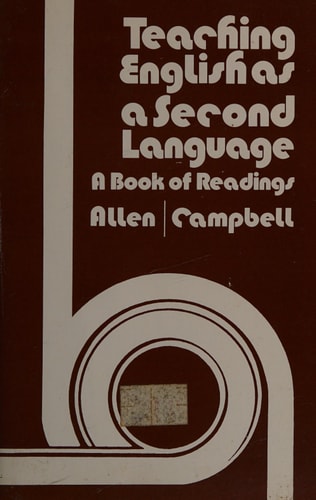
Teaching English as a Second Language: a Book of Readings
0
0
As an Amazon Associate and affiliate partner, Menrva Books earns from qualifying purchases. Learn more
Author Description
Science is growing at a pace that exceeds our comprehension. This is no less true of neuroscience than any other discipline. Ambiguity about what is known and what has been disproven confounds researchers and hampers research planning. There are simply too many research articles and too few hours in the day for anyone to read all that is relevant, let alone distinguish the reliable results from the sketchy ones.Engineering the Next Revolution in Neuroscience explores the proposal that we can overcome these obstacles to scientific progress, and revolutionize neuroscience, by using a framework to map the experimental record. With case studies from learning and memory research, the authors show that we can construct networks of experimental research that make the state of our knowledge manifest. Armed with maps of experiments, scientists can determine more efficiently what their fields have accomplished and where the unexplored territories still reside.
Menrva's Summary
THE THESIS
How can educators and researchers synthesize the diverse methodologies and theoretical frameworks required for effective English language instruction? Harold B. Allen compiles a comprehensive collection of foundational readings to address the pedagogical challenges inherent in teaching English as a second language. By curating seminal articles from the field, the text provides a structured overview of linguistic theory and practical classroom application for instructors and students alike.
THE SCOPE MAP
What You Will Find
- A curated selection of academic articles covering linguistic theory and pedagogical practice
- Historical perspectives on language acquisition methodologies
- Analysis of structural and functional approaches to English grammar and syntax
Scope Limits
- Does not cover modern digital learning tools or post-1970s technological advancements in language instruction
- Does not provide a singular, unified curriculum but rather a broad survey of existing academic thought
THE AUTHORITY PERSPECTIVE
Experts recognize this volume as a foundational reference for mid-20th-century applied linguistics and teacher training programs. Readers frequently note the academic density of the prose, which serves as a historical record of the evolution of ESL instruction.
Page Count:
406
Publication Date:
1965-01-01
Publisher:
McGraw-Hill Book
ISBN-10:
0070010706
ISBN-13:
9780070010703
Education
Teaching Methods
Reference
Linguistics
English as a Second Language
New Used & Rental Textbooks
Words Language & Grammar
Community Tags
Similar Books