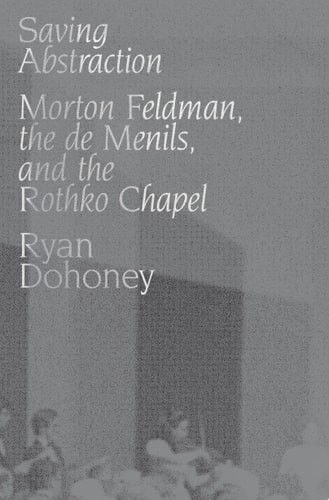
Saving Abstraction
0
0
As an Amazon Associate and affiliate partner, Menrva Books earns from qualifying purchases. Learn more
Author Description
Saving Abstraction: Morton Feldman, The De Menils, And The Rothko Chapel Tells The Story Of The 1972 Premier Of Morton Feldman's Music For The Rothko Chapel In Houston. Built In 1971 For People Of All Faiths Or None, The Chapel Houses 14 Monumental Paintings By Famed Abstract Expressionist Mark Rothko, Who Had Committed Suicide Only One Year Earlier. Upon Its Opening, Visitors' Responses To The Chapel Ranged From Spiritual Succor To Abject Tragedy--the Latter Being Closest To Rothko's Intentions. However The Chapel's Founders--art Collectors And Philanthropists Dominique And John De Menil--opened The Space To Provide An Ecumenically And Spiritually Affirming Environment That Spoke To Their Avant-garde Approach To Catholicism. A Year After The Chapel Opened, Morton Feldman's Musical Work Rothko Chapel Proved Essential To Correcting The Unintentionally Grave Atmosphere Of The De Menil's Chapel, Translating Rothko's Existential Dread Into Sacred Ecumenism For Visitors. Author Ryan Dohoney Reconstructs The Network Of Artists, Musicians, And Patrons Who Collaborated On The Premier Of Feldman's Music For The Space, And Documents The Ways Collaborators Struggled Over Fundamental Questions About The Emotional Efficacy Of Art And Its Potential Translation Into Religious Feeling. Rather Than Frame The Debate As A Conflict Of Art Versus Religion, Dohoney Argues That The Popular Claim Of Modernism's Autonomy From Religion Has Been Overstated And That The Two Have Been Continually Intertwined In An Agonistic Tension That Animates Many 20th-century Artistic Collaborations.
Menrva's Summary
THE THESIS
This book investigates how the 1972 premiere of Morton Feldman's composition 'Rothko Chapel' functioned as a critical intervention in the reception of Mark Rothko's paintings within the de Menil-founded space. Ryan Dohoney, a musicologist, utilizes archival records and correspondence to examine the intersection of avant-garde music, abstract expressionism, and ecumenical spirituality. He argues that the perceived autonomy of modernism from religious influence is a historical oversimplification, demonstrating instead that art and religion maintained a complex, agonistic relationship throughout the 20th century.
THE SCOPE MAP
What You Will Find
- Historical analysis of the 1972 premiere of Feldman's 'Rothko Chapel' in Houston.
- Examination of the collaborative network between Dominique and John de Menil, Mark Rothko, and Morton Feldman.
- Theoretical framework regarding the emotional efficacy of abstract art in religious settings.
Scope Limits
- The text does not provide a comprehensive biography of Mark Rothko or a complete survey of Feldman's entire musical catalog.
- It focuses specifically on the intersection of these figures within the context of the Rothko Chapel rather than broader 20th-century art movements.
THE AUTHORITY PERSPECTIVE
Scholars and critics recognize this work as a significant contribution to the study of interdisciplinary modernism and the intersection of sound and visual art. Readers frequently note the academic rigor of the prose and the depth of the archival research presented by the author.
Page Count:
304
Publication Date:
2019-01-01
Publisher:
Oxford University Press
ISBN-10:
0190948582
ISBN-13:
9780190948580
Biography
Music History
Modernism
Art History
Community Tags
Similar Books