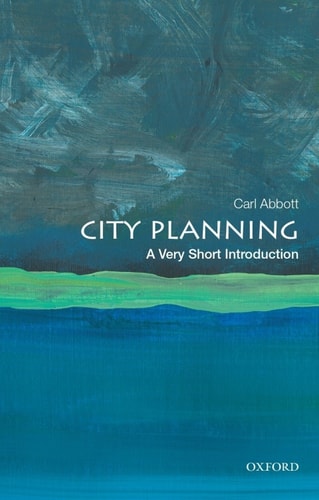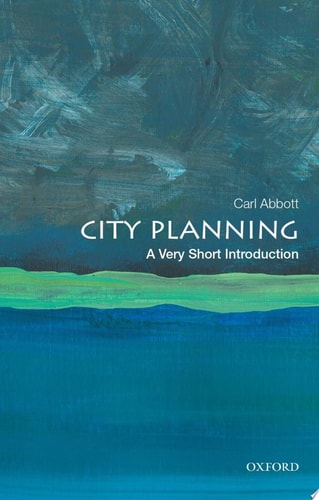
City Planning: A Very Short Introduction
0
0
As an Amazon Associate and affiliate partner, Menrva Books earns from qualifying purchases. Learn more
Author Description
City Planning Is A Practice And A Profession. It Is Also A Set Of Goals And--sometimes Utopian--aspirations. Formal Thought About The Shaping Of Cities As Physical Spaces And Social Environments Calls On The Same Range Of Disciplines And Approaches That We Use For Understanding Cities Themselves, From Art And Literature Through The Social And Natural Sciences. Surrounding The Core Profession Of City Planning, Also Known As Urban Or Town Planning, Are Related Fields Of Architecture, Landscape Design, Engineering, Geography, Political Science And Policy, Sociology, And Social Work. In Addition, The Legions Of Community And Environmental Activists Influence Debates And Controversies Within The Field. This Very Short Introduction Is Organized Around Eight Key Aspects Of City Planning: Street Layout; Congestion And Decentralization; The Response To Suburbanization; The Conservation And Regeneration Of Older Districts; Cities As Natural Systems; Cities And Regions; Social Class And Ethnicity; And Disasters And Resilience. The Underlying Assumption Throughout Is That Decisions That We Make Today About Cities And Metropolitan Regions Are Best Understood As The Continuation Of Past Efforts To Solve Fundamental Problems That Have Shifted And Evolved Over Multiple Generations. At Its Best, City Planning Utilizes Technical Tools To Achieve Goals Set By Community Action And Political Debate. Carl Abbott's Addition To Oxford's Long-running Very Short Introduction Series Is A Brief But Concentrated Look At Past Decisions About The Management Of Urban Growth And Their Effects On The Creation Of The Twenty-first Century City. About The Series: The Very Short Introductions Series From Oxford University Press Contains Hundreds Of Titles In Almost Every Subject Area. These Pocket-sized Books Are The Perfect Way To Get Ahead In A New Subject Quickly. Our Expert Authors Combine Facts, Analysis, Perspective, New Ideas, And Enthusiasm To Make Interesting And Challenging Topics Highly Reada
Menrva's Summary
THE THESIS
This book investigates the fundamental question of how city planning functions as both a professional practice and a set of evolving social aspirations. Author Carl Abbott, a professor emeritus of urban studies and planning, utilizes historical data and contemporary policy analysis to argue that modern urban management is a continuous effort to solve persistent problems that have shifted across generations.
THE SCOPE MAP
What You Will Find
- An analysis of eight core planning aspects including street layout, suburbanization, and disaster resilience.
- A framework for understanding cities as integrated natural and social systems.
- Historical context regarding the evolution of metropolitan growth management.
Scope Limits
- The text does not provide a comprehensive technical manual for professional practitioners.
- It does not offer exhaustive case studies of every global urban center.
THE AUTHORITY PERSPECTIVE
Readers frequently note the accessible yet dense nature of this introduction, which serves as a foundational overview for students and interested laypeople. Experts highlight this text as a concise entry point into the interdisciplinary complexities of urban development and policy.
Page Count:
160
Publication Date:
2020-01-01
Publisher:
Oxford University Press
ISBN-10:
0190944358
ISBN-13:
9780190944353
Non-Fiction
Architecture
Sociology
Public Policy
Geography
urban planning
Community Tags
Similar Books