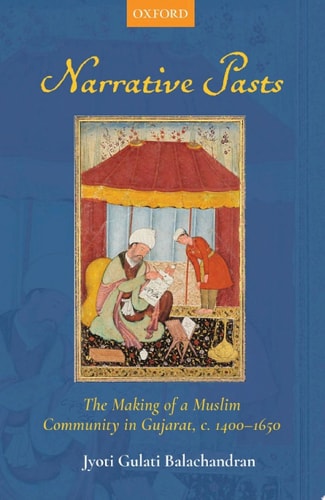
Narrative Pasts: The Making of a Muslim Community in Gujarat, c. 1400–1650
0
0
As an Amazon Associate and affiliate partner, Menrva Books earns from qualifying purchases. Learn more
Author Description
This Book Explores The Narrative Power Of Texts In Creating Communities. Through An Investigation Of Genealogical, Historical, And Biographical Texts, It Retrieves The Social History Of The Muslim Community In Gujarat, A Region With One Of The Earliest Records Of Muslim Presence In The Indian Subcontinent. By Reconstructing The Literary, Social, And Historical World Of Sufi Preceptors, Disciples, And Descendants From The Fifteenth To The Seventeenth Century, Jyoti Gulati Balachandran Highlights The Role Of Learned Muslim Men In Imparting A Prominent Regional And Historical Identity To Gujarat. The Book Reveals How Distinct Forms Of Community And Association Were Created And Shaped Over Time Through Architecture, Shrine Veneration, And Most Importantly, Textual Redefinition. Narrative Pasts Demonstrates That Gujarat Was Not Only An Important Hub Of Maritime Indian Ocean Trade, But Also An Integral Part Of The Historical And Narrative Processes That Shaped Medieval And Early Modern South Asia. Employing New And Rarely Used Literary Materials In Persian And Arabic, This Book Brings New Life And Vitality To The History Of The Region By Integrating Gujarat’s Sultanate And Mughal Past With The Larger Socio-cultural Histories Of Islamic South Asia.
Menrva's Summary
THE THESIS
This work investigates how textual production and narrative construction facilitated the formation of a distinct Muslim community in Gujarat between the fifteenth and seventeenth centuries. Dr. Jyoti Gulati Balachandran, a scholar of South Asian history, utilizes a diverse array of genealogical, biographical, and historical texts to analyze the social and cultural evolution of the region. By examining the influence of Sufi figures and their descendants, the author argues that learned men played a critical role in defining regional identity through architecture, shrine veneration, and textual redefinition.
THE SCOPE MAP
What You Will Find
- Analysis of Persian and Arabic literary materials from the fifteenth to the seventeenth century.
- Examination of the intersection between maritime trade networks and local religious identity.
- Investigation into the role of Sufi preceptors and their disciples in shaping communal associations.
Scope Limits
- The study focuses specifically on the Gujarat region and does not provide a comprehensive history of all Islamic communities in the Indian subcontinent.
- The analysis is primarily centered on the influence of learned men and textual records rather than the experiences of the broader, non-literate populace.
THE AUTHORITY PERSPECTIVE
Scholars in the field of South Asian history recognize this text as a significant contribution to the study of regional Islamic identities and the use of underutilized primary sources. Readers frequently note the academic rigor and the detailed methodology employed to bridge the gap between Sultanate and Mughal historical narratives.
Page Count:
245
Publication Date:
2020-01-01
Publisher:
OUP India
ISBN-10:
0190991968
ISBN-13:
9780190991968
History
Cultural History
India
History - Modern
Social History
Kindle eBooks
Educational Resources
Kindle Store
Categories
Islamic Studies
Asia
Asian History
Community Tags
Similar Books