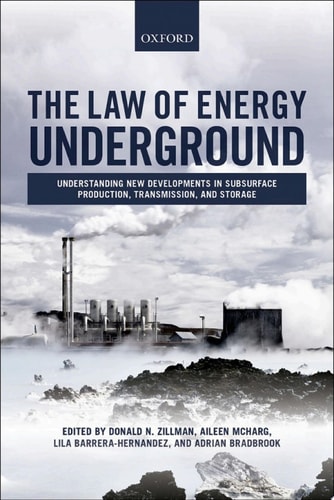
The Law of Energy Underground: Understanding New Developments in Subsurface Production, Transmission, and Storage
0
0
As an Amazon Associate and affiliate partner, Menrva Books earns from qualifying purchases. Learn more
Author Description
While energy has been extracted from the ground for two centuries, recent years have seen transformative changes to how easy it is to access underground energy resources. This book investigates the key challenges and legal consequences of recent developments in the use of the subsurface as a source of energy. It provides a comprehensive analysis of the new technologies that have made this possible, such as the extraction of unconventional oil and gas resources through horizontal drilling and hydraulic fracturing, also known as fracking. Further developments include the expanded use of geothermal energy, which has the potential to beome a major renewable energy source. The subsurface can also be utilised for long-term disposal or storage of environmentally harmful by-products of energy use, such as carbon capture and storage (CCS), and disposal of spent nuclear fuel and other nuclear waste. Successful development of these technologies could enhance the use of fossil and nuclear energy by reducing the harm caused by the release of greenhouse gases and harmful radiation. The authors bring together a wide variety of expertise and knowledge to examine the legal implications of the development and control of these underground activities. They provide an invaluable understanding of the legal frameworks applicable to the extraction of underground energy, both at the international level and in a number of important national jurisdictions. Importantly, the book analyses the different regulatory responses to these developments across five continents, and assesses in detail the environmental impact of new energy extraction technologies.
Menrva's Summary
THE THESIS
This book investigates the complex legal frameworks and regulatory challenges emerging from the modern utilization of the subsurface for energy production, transmission, and storage. The authors, a team of legal scholars and experts, synthesize international and national legal precedents to evaluate how current laws govern unconventional resource extraction and waste sequestration. By examining the intersection of technological advancement and environmental policy, the text provides a structured analysis of how different jurisdictions manage the risks and benefits of subsurface energy activities.
THE SCOPE MAP
What You Will Find
- Analysis of unconventional oil and gas extraction, including horizontal drilling and hydraulic fracturing.
- Legal frameworks regarding geothermal energy development and carbon capture and storage (CCS).
- Regulatory approaches to the disposal of nuclear waste and other energy-related by-products.
- Comparative studies of legal responses across five continents.
Scope Limits
- The text does not provide a technical engineering manual for subsurface operations.
- It does not offer exhaustive coverage of every minor national jurisdiction, focusing instead on key representative legal systems.
THE AUTHORITY PERSPECTIVE
Experts identify this work as a foundational resource for understanding the evolving intersection of energy law and environmental regulation. Readers frequently note the academic density of the prose, which serves as a comprehensive reference for legal practitioners and policy analysts.
Page Count:
546
Publication Date:
2014-01-01
Publisher:
OUP Oxford
ISBN-10:
0191008265
ISBN-13:
9780191008269
Sustainability
Energy Law
Technology
Natural Resources
Professional Career & Trade
Law
Community Tags
Similar Books