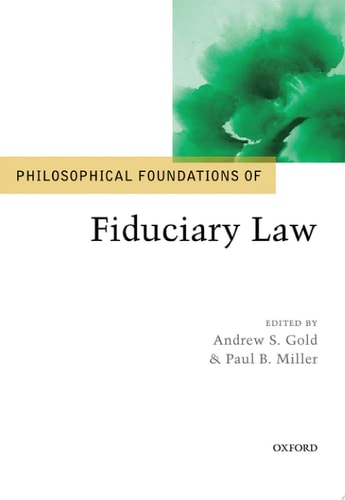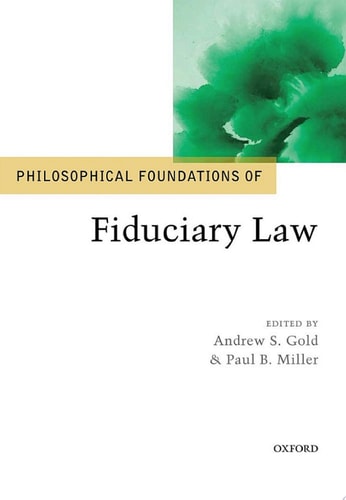
Philosophical Foundations of Fiduciary Law
0
0
As an Amazon Associate and affiliate partner, Menrva Books earns from qualifying purchases. Learn more
Author Description
Fiduciary law is a critically important body of law. Fiduciary duties ensure the integrity of a remarkable variety of relationships, institutions, and organizations. They apply to relationships of great personal significance, including in some jurisdictions the relationship between parents and children. They structure a wide variety of commercial relationships, and they are essential to the regulation of relationships between professional service providers and their clients, including relationships between lawyer and client, doctor and patient, and investment manager and client. Fiduciary duties, perhaps uniquely in private law, challenge traditional ways of marking the boundaries between private and public law, inasmuch as they figure prominently in public governance. Indeed, there is even a storied tradition of thinking of the authority of the state in fiduciary terms. Notwithstanding its importance, fiduciary law has been woefully under-analysed by legal theorists. Filling this gap with a series of chapters by leading theorists, this book includes chapters on: the nature of fiduciary relationships, the connection between fiduciary duties and morality, the content and significance of fiduciary loyalty, the economic significance of fiduciary law, the application of fiduciary principles to public law and international law, the import of fiduciary relationships to theories of authority, and various other fundamental topics in the field. In many cases, new and important questions are raised by the book's chapters. Indeed, this book not only offers a much-needed theoretical assessment of fiduciary topics, it defines the field going forward, setting an agenda for future philosophical study of fiduciary law.
Menrva's Summary
THE THESIS
This volume investigates the core philosophical questions and theoretical underpinnings that define the structure and function of fiduciary law. Editors Andrew S. Gold and Paul B. Miller, both established scholars in legal theory, curate a collection of essays from leading experts to address the historical neglect of fiduciary principles in academic discourse. The text provides a rigorous framework for understanding how fiduciary duties operate across private, public, and international legal domains.
THE SCOPE MAP
What You Will Find
- Analysis of the nature of fiduciary relationships and their moral foundations
- Examination of the economic significance and regulatory utility of fiduciary loyalty
- Application of fiduciary principles to public governance and international law
- Theoretical inquiries into the authority of the state through a fiduciary lens
Scope Limits
- Does not serve as a practical handbook for legal practitioners or a casebook for litigation
- Excludes exhaustive jurisdictional surveys of specific fiduciary statutes
THE AUTHORITY PERSPECTIVE
Legal scholars and academics recognize this work as a foundational text that successfully formalizes the philosophical study of fiduciary obligations. Readers frequently note the high level of academic density, making it a primary resource for those engaged in advanced jurisprudence and legal philosophy.
Page Count:
448
Publication Date:
2014-01-01
Publisher:
OUP Oxford
ISBN-10:
0191005290
ISBN-13:
9780191005299
Philosophy
Professional Career & Trade
Law
Fiduciary Law
Legal Theory
Jurisprudence
Professional Ethics