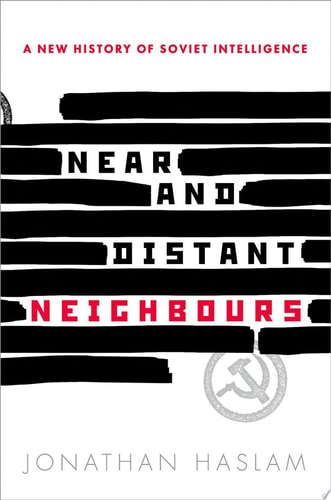
Near and Distant Neighbours
0
0
As an Amazon Associate and affiliate partner, Menrva Books earns from qualifying purchases. Learn more
Author Description
Near And Distant Neighbours Is The First Ever Substantiated And Complete History Of Soviet Intelligence. Based On A Mass Of Newly Declassified Russian Secret Intelligence Documentation, It Reveals The True Story Of Soviet Intelligence From Its Very Beginnings In 1917 Right Through To The End Of The Cold War. Covering Both Main Branches Of Soviet Espionage - Civilian And Military - Jonathan Haslam Charts The Full Range Of The Soviet Intelligence Effort And The Story Of Its Development: In Cryptography, Disinformation, Special Forces, And Counter-intelligence. In A Tragic Irony, An Organization That So Casually Disposed Of Others Critically Depended Upon The Human Factor. Due To Their Lack Of Expertise And Technological Know-how, From Early On The Soviets Were Forced To Rely Heavily On Secret Agents Instead Of The More Sophisticated Code-breaking Techniques Of Other Intelligence Agencies. But In This They Were Highly Successful, Recruiting Spy Rings Such As The Infamous 'cambridge Five' In The 1930s. Had It Not Been For Soviet Espionage Against Britain's Code-breaking Effort During The Second World War, Stalin Might Never Have Won The Victory That Later Enabled Him To Dominate Half Of Europe. Similarly, Espionage Directed At His Allies Enabled The Soviets To Build An Atomic Bomb Earlier Than Expected And To Take Calculated Risks In Post-war Diplomacy, Such As His Audacious Blockade Of Berlin Which Led To The Berlin Airlift. Khrushchev's Denunciation Of Stalin In 1956 Alienated Many Of The Foreign 'friends' So Valued By The Soviet Intelligence Services. It Also Made New Recruitment Of Foreign Agents Much More Difficult, As The Ussr Rapidly Lost Its Glamour And Ideological Appeal To Potential Supporters In The West During The 1950s. However, The Gap Was Finally Bridged Through Exploiting Greedy And Disloyal Western Intelligence Officers, Using Blackmail And Bribery - And With Great Success. In Fact, It Was The Ultimate Irony That The Kgb And Gru Had Never Been More Effe
Menrva's Summary
THE THESIS
This book investigates the comprehensive history and operational evolution of Soviet intelligence from the 1917 revolution through the conclusion of the Cold War. Jonathan Haslam, a distinguished historian of Soviet foreign policy, utilizes a vast collection of newly declassified Russian secret intelligence documentation to reconstruct the internal mechanics of the KGB and GRU. The work argues that the Soviet intelligence apparatus, despite its technological limitations, achieved significant geopolitical influence by prioritizing human intelligence networks over sophisticated code-breaking capabilities.
THE SCOPE MAP
What You Will Find
- A detailed examination of both civilian and military branches of Soviet espionage.
- Analysis of key operational areas including cryptography, disinformation, special forces, and counter-intelligence.
- Historical accounts of major recruitment successes, such as the Cambridge Five, and their impact on global conflicts.
Scope Limits
- The text focuses primarily on the institutional development and strategic outcomes of Soviet intelligence rather than individual agent biographies.
- The narrative concludes with the end of the Cold War and does not extend into the post-Soviet era of intelligence operations.
THE AUTHORITY PERSPECTIVE
Historians and intelligence scholars recognize this work as a foundational, evidence-based account that corrects many myths surrounding Soviet espionage. Readers frequently note the academic density of the prose, which provides a rigorous and authoritative analysis of the Soviet state's reliance on human intelligence.
Page Count:
496
Publication Date:
2015-01-01
Publisher:
Oup Oxford
ISBN-10:
0191018120
ISBN-13:
9780191018121
History
Military History
Espionage
Intelligence
Soviet Union
Cold War
Community Tags
Similar Books