
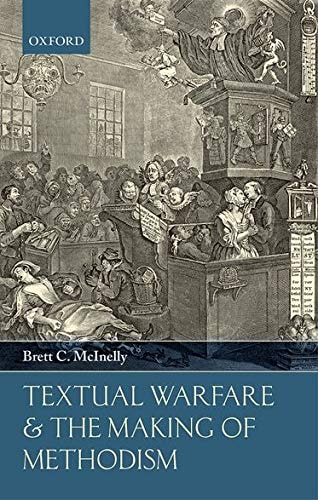
Textual Warfare and the Making of Methodism
0
0
As an Amazon Associate and affiliate partner, Menrva Books earns from qualifying purchases. Learn more
Author Description
Textual Warfare and the Making of Methodism argues that the eighteenth-century Methodist revival participated in and was produced by a rich textual culture that includes both pro- and anti-Methodist texts; and that Methodism be understood and approached as a rhetorical problem-as a point of contestation and debate resolved through discourse. Methodist belief and practice attracted its share of negative press, and Methodists eagerly (and publically) responded to their critics; and the controversy generated by the revival ensured that Methodism would be conditioned by textual and rhetorical processes, whether in published polemic and apologia, or in private diaries and letters as Methodists navigated the complexities of their spiritual lives and anti-Methodist efforts to undermine their faith. While it may seem obvious to conclude that a controversial movement would be shaped by controversy, Textual Warfare examines the specific ways Methodist belief, practice, and self-understanding were filtered through the anti-Methodist critique; the particular historic and cultural conditions that informed this process; and the overwhelming extent to which Methodism in the eighteenth century was mediated by texts and rhetorical exchange. The proliferation of print media and the relative freedom of the press in the eighteenth century; the extent to which society generally and Methodism specifically promoted literacy; and a cultural sensibility predisposed to open debate on matters of public interest, ensured the development of a public sphere in which individuals came together to deliberate, in conversation and in print, on a range of issues relevant to the larger community. It was within this sphere that Methodist religiosity, including the intensely private nature of spiritual conversion, became matters of civic concern on an unprecedented scale and that Methodism ultimately took its form.
Menrva's Summary
THE THESIS
This book investigates how the eighteenth-century Methodist revival was fundamentally shaped and defined by the intense rhetorical conflict and textual exchange between its proponents and critics. Brett C. McInelly, a scholar of eighteenth-century literature and culture, utilizes a framework of rhetorical analysis to examine how Methodism functioned as a public problem. By analyzing a wide array of polemical literature, personal diaries, and letters, the author argues that the movement's identity was not formed in isolation but was instead forged through the necessity of responding to external critique and internal self-justification within the burgeoning public sphere.
THE SCOPE MAP
What You Will Find
- Analysis of eighteenth-century print culture and the role of the public sphere in religious debate.
- Examination of the dialectical relationship between pro-Methodist apologia and anti-Methodist polemic.
- Investigation into how private spiritual experiences were translated into public discourse.
Scope Limits
- The study focuses primarily on the textual and rhetorical dimensions of the movement rather than a comprehensive theological history.
- The analysis is constrained to the eighteenth-century context and does not track the evolution of Methodism into the nineteenth century.
THE AUTHORITY PERSPECTIVE
Scholars in the field of religious history and eighteenth-century studies recognize this work as a significant contribution to understanding the intersection of print media and religious identity. Readers frequently note the academic density of the prose, which provides a rigorous examination of how public debate influenced the institutional development of the Methodist movement.
Page Count:
256
Publication Date:
2014-01-01
Publisher:
OUP Oxford
ISBN-10:
0191019127
ISBN-13:
9780191019128
Religion
History
Eighteenth Century
Rhetoric
Methodism
Print Culture
Methodism history
Community Tags
Other Editions(2)
Similar Books

Reader Comments
Share Your Thoughts
No comments yet. Be the first to share your thoughts!