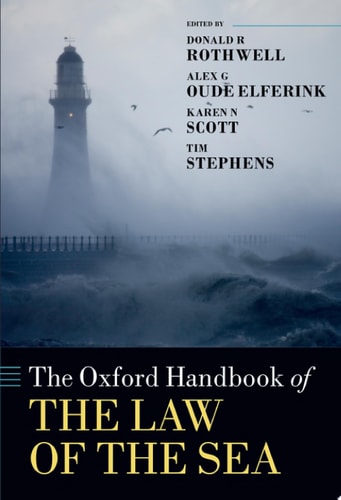
The Oxford Handbook of the Law of the Sea
0
0
As an Amazon Associate and affiliate partner, Menrva Books earns from qualifying purchases. Learn more
Author Description
Human Activities Have Taken Place In The World's Oceans And Seas For Most Of Human History. With Such A Vast Number Of Ways In Which The Oceans Can Be Used For Trade, Exploited For Natural Resources And Fishing, As Well As Concerns Over Maritime Security, The Legal Systems Regulating The Rights And Responsibilities Of Nations In Their Use Of The World's Oceans Have Long Been A Crucial Part Of International Law. The United Nations Convention On The Law Of The Sea Comprehensively Defined The Parameters Of The Law Of The Sea In 1982, And Since The Convention Was Concluded It Has Seen Considerable Development. This Oxford Handbook Provides A Comprehensive And Original Analysis Of Its Current Debates And Controversies, Both Theoretical And Practical. Written By Over Forty Expert And Interdisciplinary Contributors, The Handbook Sets Out How The Law Of The Sea Has Developed, And The Challenges It Is Currently Facing. The Handbook Consists Of Forty Chapters Divided Into Six Parts. First, It Explains The Origins And Evolution Of The Law Of The Sea, With A Particular Focus Upon The Role Of Key Publicists Such As Hugo Grotius And John Selden, The Gradual Development Of State Practice, And The Creation Of The 1982 Un Convention. It Then Reviews The Components Which Comprise The Maritime Domain, Assessing Their Definition, Assertion, And Recognition. It Also Analyses The Ways In Which Coastal States Or The International Community Can Assert Control Over Areas Of The Sea, And The Management And Regulation Of Each Of The Maritime Zones. This Includes Investigating The Development Of The Mechanisms For Maritime Boundary Delimitation, And The Decisions Of The International Tribunal For The Law Of The Sea. The Handbook Also Discusses The Actors And Intuitions That Impact On The Law Of The Sea, Considering Their Particular Rights And Interests, In Particular Those Of State Actors And The Principle Law Of The Sea Institutions. Then It Focuses On Operational Issues, Investigating Longst
Menrva's Summary
THE THESIS
This volume investigates the current theoretical and practical debates surrounding the international legal framework governing the world's oceans. The editors, Alex G. Oude Elferink, Donald R. Rothwell, Karen N. Scott, and Tim Stephens, curate contributions from over forty interdisciplinary experts to analyze the evolution of the Law of the Sea since the 1982 United Nations Convention. The text provides a rigorous examination of how state practice, historical legal precedents, and modern institutional mechanisms interact to regulate maritime zones and international maritime security.
THE SCOPE MAP
What You Will Find
- Historical analysis of the origins of maritime law, including the influence of Hugo Grotius and John Selden.
- Detailed assessment of maritime boundary delimitation and the role of the International Tribunal for the Law of the Sea.
- Examination of the rights and interests of state actors and international maritime institutions.
- Analysis of the management and regulation of various maritime zones.
Scope Limits
- The text focuses primarily on international legal frameworks and may not cover localized domestic maritime regulations in exhaustive detail.
- While it addresses operational issues, it does not serve as a manual for maritime navigation or technical maritime engineering.
THE AUTHORITY PERSPECTIVE
Experts and legal scholars recognize this handbook as a foundational reference for understanding the complexities of contemporary maritime law. Readers frequently note the academic density of the prose, which makes it a primary resource for researchers and practitioners in the field of international law.
Page Count:
850
Publication Date:
2015-01-01
Publisher:
Oup Oxford
ISBN-10:
0191024643
ISBN-13:
9780191024641
International Law
Maritime law
Reference
Law
Community Tags
Other Editions(2)
Similar Books













Reader Comments
Share Your Thoughts
No comments yet. Be the first to share your thoughts!