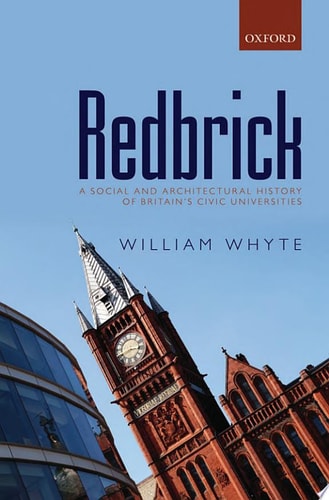
Redbrick: A Social and Architectural History of Britain's Civic Universities
0
0
As an Amazon Associate and affiliate partner, Menrva Books earns from qualifying purchases. Learn more
Author Description
In The Last Two Centuries Britain Has Experienced A Revolution In Higher Education, With The Number Of Students Rising From A Few Hundred To Several Million. Yet The Institutions That Drove - And Still Drive - This Change Have Been All But Ignored By Historians. Drawing On A Decade's Research, And Based On Work In Dozens Of Archives, Many Of Them Used For The Very First Time, This Is The First Full-scale Study Of The Civic Universities - New Institutions In The Nineteenth Century Reflecting The Growth Of Major Victorian Cities In Britain, Such As Liverpool, Manchester, Birmingham, York, And Durham - For More Than 50 Years. Tracing Their Story From The 1780s Until The 2010s, It Is An Ambitious Attempt To Write The Redbrick Revolution Back Into History. William Whyte Argues That These Institutions Created A Distinctive And Influential Conception Of The University - Something That Was Embodied In Their Architecture And Expressed In The Lives Of Their Students And Staff. It Was This Redbrick Model That Would Shape Their Successors Founded In The Twentieth Century: Ensuring That The Normal University Experience In Britain Is A Redbrick One. Using A Vast Range Of Previously Untapped Sources, Redbrick Is Not Just A New History, But A New Sort Of University History: One That Seeks To Rescue The Social And Architectural Aspects Of Education From The Disregard Of Previous Scholars, And Thus Provide The Richest Possible Account Of University Life. It Will Be Of Interest To Students And Scholars Of Modern British History, To Anyone Who Has Ever Attended University, And To All Those Who Want To Understand How Our Higher Education System Has Developed - And How It May Evolve In The Future.
Menrva's Summary
THE THESIS
This book investigates the historical development and cultural significance of Britain's civic universities, arguing that these institutions established a unique model of higher education that continues to define the modern student experience. William Whyte, a professor of social and architectural history, utilizes extensive archival research to examine the evolution of these universities from the late 18th century to the present. He posits that the physical architecture and social structures of these institutions were intentional expressions of Victorian urban growth and civic identity.
THE SCOPE MAP
What You Will Find
- A comprehensive history of civic universities in cities like Liverpool, Manchester, Birmingham, York, and Durham.
- An analysis of the intersection between architectural design and pedagogical philosophy.
- A synthesis of social history and institutional development spanning over two centuries.
Scope Limits
- The study focuses primarily on the British civic university model and does not provide a comparative analysis of international higher education systems.
- The narrative prioritizes the social and architectural evolution of these institutions over detailed biographies of individual faculty members.
THE AUTHORITY PERSPECTIVE
Scholars and historians recognize this work as a significant contribution to the study of British institutional history, particularly for its integration of architectural evidence with social data. Readers frequently note the meticulous archival research and the author's ability to synthesize complex historical trends into a coherent narrative.
Page Count:
416
Publication Date:
2015-01-01
Publisher:
OUP Oxford
ISBN-10:
0191025224
ISBN-13:
9780191025228
History
Architecture
Education Theory
Schools & Teaching
Education higher
Kindle Store
Higher Education
Great Britain
British History
Social History
Categories
Education
Kindle eBooks
Europe
Educational Resources
Community Tags
Similar Books