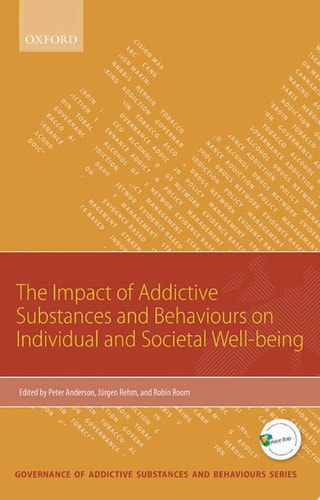
Impact of Addictive Substances and Behaviours on Individual and Societal Well-being
0
0
As an Amazon Associate and affiliate partner, Menrva Books earns from qualifying purchases. Learn more
Author Description
Impact of Addictive Substances and Behaviours on Individual and Societal Well-being outlines an innovative and fascinating new framework for understanding the harm that addictive substances and behaviours can cause. Taking a holistic approach and with well-being as a central tenet, it demonstrates how using different methods can lead to a more just and evidence-based approach to dealing with addictions. Presenting the latest and most comprehensive research, the expert team of authors examines the harm caused by addictive substances and behaviour, factors that contribute to addictions, and current European approaches to governing addictive substances and behaviours. It is both legal and illegal drugs, and behaviour that cause harm. For the world as a whole, cigarettes were the second largest cause of ill health and early death in 2010, alcohol the fifth, and illegal drugs the eighteenth. Regular and sustained heavy engagement in addictive substances and behaviour also impacts on quality of life and material living conditions. The well-being framework outlined here for understanding this impact places particular emphasis on the reciprocal relationship between well-being and drug use: well-being can be a driver of the heavy use of addictive substances and behaviours, and also compounds the harm done. Furthermore, the response of society can increase the harm caused by drug use, and stigma, social exclusion, and the actions of the criminal justice system can impair individual and societal well-being considerably. Impact of Addictive Substances and Behaviours on Individual and Societal Well-being is based on the research from ALICE RAP, a multidisciplinary European study of addictive substances and behaviours in contemporary society. A timely addition to the field, this book is essential reading for those wanting to make a real impact in the field of addiction prevention policy, including public managers, practitioners, public health professionals, and stakeholders.
Menrva's Summary
THE THESIS
This book investigates how a well-being-centered framework can provide a more equitable and evidence-based approach to governing addictive substances and behaviors. The authors, Jürgen Rehm, Robin Room, and Peter Anderson, utilize data from the ALICE RAP project to analyze the reciprocal relationship between individual well-being and substance use. By examining both legal and illegal substances alongside addictive behaviors, the text argues that societal responses—such as stigma and criminal justice policies—often exacerbate the harm caused by addiction.
THE SCOPE MAP
What You Will Find
- A comprehensive analysis of the health impacts of tobacco, alcohol, and illegal drugs.
- A multidisciplinary framework for evaluating the reciprocal link between quality of life and addictive behaviors.
- An overview of current European governance strategies regarding addiction prevention and policy.
Scope Limits
- The text focuses primarily on European policy contexts and may not fully address global variations in addiction governance.
- It does not provide clinical treatment protocols for individual patients, focusing instead on macro-level societal and policy impacts.
THE AUTHORITY PERSPECTIVE
Experts recognize this work as a significant synthesis of the ALICE RAP study, providing a structured approach for policymakers and public health professionals. Readers frequently note the academic density of the prose, which is tailored for those involved in high-level addiction prevention and governance.
Page Count:
364
Publication Date:
2015-01-01
Publisher:
OUP Oxford
ISBN-10:
019102337X
ISBN-13:
9780191023378
Allied Health
Sociology
Social Science
Addiction Studies
Medical
Public Health
Public Policy
Community Tags
Similar Books

Reader Comments
Share Your Thoughts
No comments yet. Be the first to share your thoughts!