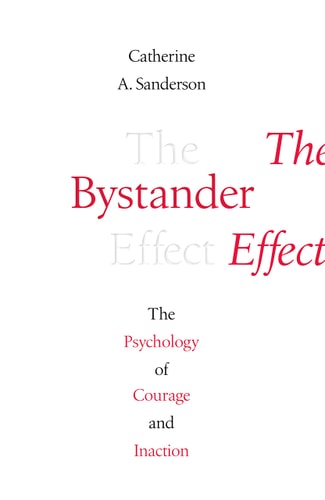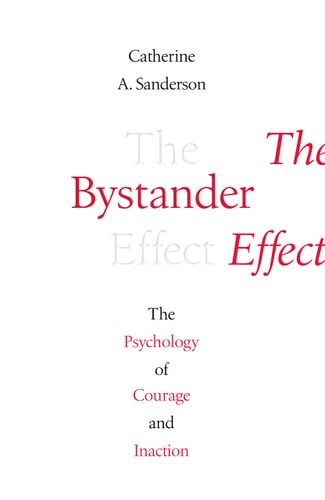
The Bystander Effect: The Psychology of Courage and Inaction
0
0
As an Amazon Associate and affiliate partner, Menrva Books earns from qualifying purchases. Learn more
Author Description
Fantastic... It explains the misperception of stacked odds and personal powerlessness that stops individuals challenging bad behaviour. Stunning. Humbling. Thought-provoking Kathryn Mannix, author of With the End in MindIn the face of discrimination, bad behaviour, evil and abuse, why do good people so often do nothing?Every day, we see examples of bad or immoral behaviour - from sexual harassment to political corruption, from negligence to bullying.Why did no one stop the abduction of Jamie Bulger, despite many witnesses reporting they felt uneasy seeing the two-year-old's distress? How did the USA gymnastics team doctor, Larry Nassar, abuse hundreds of young women under his care for so long? Why didn't anyone intervene when David Dao, an innocent sixty-nine-year-old man, was forcibly removed from his seat on a United Airlines aeroplane and dragged down the aisle by security officers? How did large crowds of men get away with sexually assaulting an estimated 1,200 women in Cologne during the 2015 New Year's Eve celebrations?In The Bystander Effect, pioneering psychologist Catherine Sanderson uses real-life examples, neuroscience and the latest psychological studies to explain why we might be good at recognising bad behaviour but bad at taking action against it. With practical strategies to transform your thinking, she shows how we can all learn to speak out, intervene, think outside the group mentality and ultimately become braver versions of ourselves.Courage is not a virtue we're born with. A bystander can learn to be brave.
Menrva's Summary
THE THESIS
This book investigates why individuals often fail to act in the face of witnessing wrongdoing, exploring the psychological underpinnings of inaction. Catherine Sanderson, a pioneering psychologist, examines real-life incidents such as the Jamie Bulger abduction, the Larry Nassar abuse scandal, and the David Dao United Airlines incident to illustrate the phenomenon of the bystander effect. The book draws on neuroscience and the latest psychological studies to explain the disconnect between recognizing bad behavior and intervening. Sanderson offers practical strategies to help individuals overcome group mentality and cultivate bravery, asserting that courage is a learned trait.
THE SCOPE MAP
- Analysis of high-profile cases demonstrating the bystander effect.
- Explanation of psychological factors contributing to inaction, such as perceived powerlessness and misperceptions of the situation.
- Integration of neuroscience findings related to decision-making and social behavior.
- Presentation of recent psychological studies on courage and intervention.
- Strategies for individuals to develop bravery and overcome the tendency to remain passive.
- Discussion of concepts like group mentality and conformity.
- Exploration of the difference between recognizing unethical behavior and taking action.
THE AUTHORITY PERSPECTIVE
The book is described as 'fantastic,' 'humbling,' and 'thought-provoking,' with praise for its explanation of how stacked odds and personal powerlessness can prevent individuals from challenging bad behavior. The reception highlights its ability to illuminate the psychological reasons behind inaction in the face of discrimination, abuse, and negligence. It is noted for its ability to make readers consider their own potential responses in similar situations. The work is seen as a valuable resource for understanding and fostering courage.
Page Count:
272
Publication Date:
2020-04-02
Publisher:
HarperCollins Publishers Limited
ISBN-10:
0008361630
ISBN-13:
9780008361631
History
Non-Fiction
Self-help
Philosophy
Psychology
Emotions
Psychology
Good & Evil
Social Science
Experimental Psychology
Social History
Community Tags
Similar Books