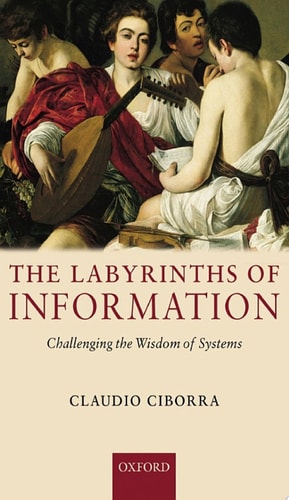
Labyrinths of Information: Challenging the Wisdom of Systems
0
0
As an Amazon Associate and affiliate partner, Menrva Books earns from qualifying purchases. Learn more
Author Description
How to use information and communication technologies in organizations and how to manage their impact has been the traditional domain of computer specialists and management consultants. The former have offered multiple ways to represent, model, and build applications that would streamline and accelerate data flows, while the latter have been busy linking the deployment of ICTs with strategy and the redesign of business processes. This book takes quite a different approach altogether. In a series of essays, Ciborra uses a string of metaphors -- such as Bricolage, Krisis, Gestell, etc. -- to place a concern for human existence and our working lives at the centre of the study of ICTs and their diffusion in business organizations, and looks at our practices, improvisations, and moods. He draws upon his own extensive research and consulting experience to throw a fresh light on some key questions: why are systems ambiguous? Why do they not give us more time to do things? Is there strategic value in tinkering even in high-tech settings? What is the value of age-old practices in dealing with new technologies? What is the role of moods and affections in influencing action and cognition? Labyrinths of Information presents an alternative to the current approaches in management, software-engineering, and strategy that will be of interest to all those concerned with the deployment of ICTs in society today -- whether as users, managers, designers, policy makers, or the merely curious.
Menrva's Summary
THE THESIS
This book investigates the fundamental tension between rigid information systems and the fluid, often ambiguous nature of human practice within organizational environments. Claudio U. Ciborra, a scholar in information systems, challenges the prevailing technocratic view that prioritizes efficiency and strategic alignment. By drawing on existential philosophy and his own extensive consulting background, he argues that the human experience—including our moods, improvisations, and daily habits—is central to understanding how technology is actually adopted and used in the workplace.
THE SCOPE MAP
What You Will Find
- Philosophical metaphors including Bricolage, Krisis, and Gestell to analyze technology.
- Critical examination of why information systems often fail to deliver promised time-saving benefits.
- Analysis of the role of human affect and mood in decision-making and cognition.
- Exploration of the strategic value of tinkering and informal practices.
Scope Limits
- The text does not provide technical manuals or software engineering blueprints for system implementation.
- It avoids prescriptive management checklists in favor of conceptual and existential inquiry.
THE AUTHORITY PERSPECTIVE
Experts and academics in the field of information systems recognize this work as a foundational critique of traditional management theory. Readers frequently note the philosophical density of the prose, which requires careful engagement with the author's metaphorical framework.
Page Count:
212
Publication Date:
2004-01-01
Publisher:
OUP Oxford
ISBN-10:
0191037303
ISBN-13:
9780191037306
Business strategy
Information Technology
Management
Organizational change
Philosophy of
Professional Career & Trade
Community Tags
Similar Books