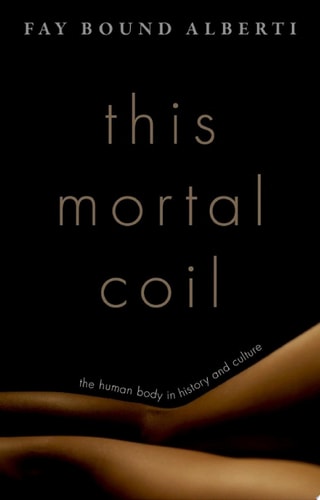
This Mortal Coil: The Human Body in History and Culture
0
0
As an Amazon Associate and affiliate partner, Menrva Books earns from qualifying purchases. Learn more
Author Description
How humans have felt and thought about the body-our bodies-has never been static. Rather, it has shifted across times and cultures, taking and losing definition due to any number of forces and trends-philosophical, religious, cultural, technological. Sometimes we imagine our identity purely as an extension of our fleshly self and its assemblage of functions, organs, and appendages, sometimes as something entirely separate and discrete-trapped as opposed to defined by our "mortal coil," as Hamlet frames it in his famous soliloquy. So, too, over time, our ideas about what constitutes the desirable, the healthy, the beautiful, and the whole have remained partial, each an impression formed by its particular moment in time.In this probing and illuminating new book, Fay Bound Alberti deploys the global histories of medicine, pathology, and sensibilities to examine our changing notions of the human body. Each chapter focuses on one part-bones, skin, sexual organs, spine, tongue, heart-revealing the cultural meanings tied to each, the repercussions of these associations, and ultimately the harm that comes of distinguishing mind and body, the parts from the whole, as is so often the case in Western medicine. This Mortal Coil explores many enduring themes: the nature of identity, the relationship between the brain and the heart, and the gendering of our physical and emotional selves. Moving beyond the surface and down to what lies beneath, Bound Alberti provides a rich and fascinating account of the human body, shedding light on the role scientific developments-from medical care to plastic surgery to cloning-play in how we look at and shape ourselves. Bound Alberti's provocative and engrossing book reveals how the mortal coil can be unwound, then looked at as if for the first time.
Menrva's Summary
THE THESIS
How have shifting cultural, religious, and technological forces redefined the human body throughout history? Fay Bound Alberti, a historian of medicine and emotion, utilizes a multidisciplinary approach to analyze the body not as a static biological entity, but as a construct of its time. By synthesizing medical history, pathology, and cultural theory, she argues that the Western tendency to fragment the body into discrete parts has profound implications for identity and health.
THE SCOPE MAP
What You Will Find
- Historical analysis of specific body parts including bones, skin, sexual organs, and the heart.
- Examination of the mind-body dualism prevalent in Western medical traditions.
- Discussion of how modern technologies like plastic surgery and cloning influence self-perception.
Scope Limits
- The text focuses primarily on Western medical and cultural perspectives rather than a comprehensive global history of all civilizations.
- It does not provide a clinical medical manual but rather a cultural and historical critique of medical practice.
THE AUTHORITY PERSPECTIVE
Scholars and readers frequently note the academic rigor and interdisciplinary breadth of the prose. Experts highlight this as a significant contribution to the history of medicine and the cultural understanding of the physical self.
Page Count:
301
Publication Date:
2016-01-01
Publisher:
OUP Oxford
ISBN-10:
0191036560
ISBN-13:
9780191036569
Science
Politics
Philosophy
History
Basic Sciences
Medicine
Philosophy history
Special Topics
New Age
Human Body
Medical
Allied Health
Kindle eBooks
Sociology
Womens Studies
Feminist Theory
Kindle Store
Categories
Educational Resources
Community Tags
Similar Books