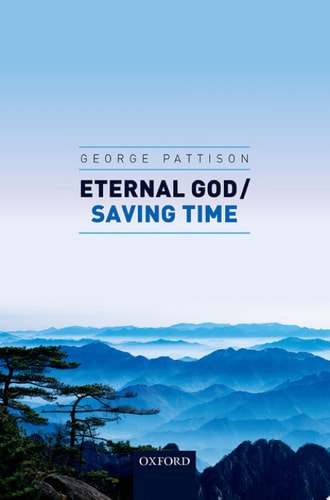
Eternal God: Saving Time
0
0
As an Amazon Associate and affiliate partner, Menrva Books earns from qualifying purchases. Learn more
Author Description
Starting from the assumption that 'time is the horizon of the meaning of Being' (Heidegger), Eternal God/ Saving Time attempts to discover what the central religious idea of eternity or of God as 'the Eternal' might mean today. Negotiating ideas of divine timelessness and sempiternity (everlastingness) as well as the attempts of some philosophers to develop the idea of a temporal God, Professor George Pattison surveys a range of positions from analytic philosophy and from the continental tradition from Spinoza through Hegel to the present. Intellectual and cultural forces have tended to separate time and eternity, and both philosophical and theological examples of this tendency are examined. Nevertheless, starting from the experience of life in time, some modern thinkers have developed a new approach to the Eternal as what grounds or gives time. This leads through ideas of novelty, utopia, hope, promise, and call to the projection of a creative and transformative memory-remembering the future-that affirms human solidarity and mutual responsibility. Even if this cannot be made good in terms of knowledge, it offers a basis for hope, prayer, and commitment and these options are explored through a range of Christian, Jewish, Greek, and secular thinkers. This development re-envisages the idea of redemption, away from the Augustinian view that time is what we need to be rescued from and towards the idea that time itself might save us from all that is destructive and tyrannical in time's rule over human life.
Menrva's Summary
THE THESIS
This work investigates the contemporary relevance of the religious concept of eternity and the nature of God as the Eternal within the context of human temporal experience. Professor George Pattison, a scholar of theology and philosophy, evaluates the historical and conceptual divide between time and eternity. He argues that rather than viewing time as something to escape, modern thought can reframe time as a potential site for redemption, hope, and social responsibility.
THE SCOPE MAP
What You Will Find
- Comparative analysis of analytic and continental philosophical traditions regarding divine timelessness.
- Examination of thinkers ranging from Spinoza and Hegel to contemporary figures.
- Exploration of theological concepts including novelty, utopia, hope, and the promise of a transformative future.
Scope Limits
- The text does not provide a definitive empirical proof of the Eternal, acknowledging that these concepts operate beyond the bounds of traditional knowledge.
THE AUTHORITY PERSPECTIVE
Scholars and students of theology frequently note the intellectual rigor and dense philosophical engagement present throughout the text. Experts highlight this as a significant contribution to the ongoing dialogue between historical religious thought and modern secular philosophy.
Page Count:
368
Publication Date:
2015-01-01
Publisher:
OUP Oxford
ISBN-10:
0191036110
ISBN-13:
9780191036118
Philosophy
Religion
Theology
Eternity
Time
Continental Philosophy
Metaphysics
Community Tags
Similar Books