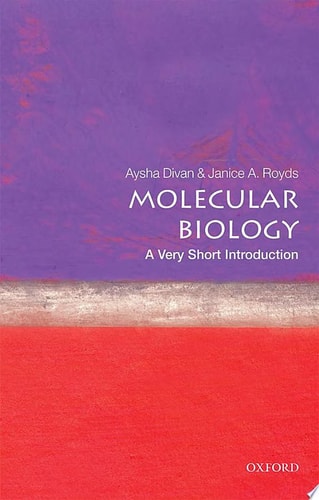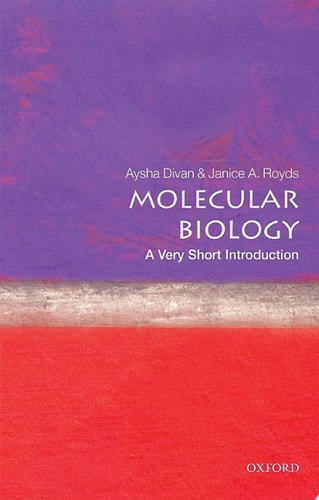
Molecular Biology: A Very Short Introduction
0
0
As an Amazon Associate and affiliate partner, Menrva Books earns from qualifying purchases. Learn more
Author Description
Molecular Biology is the story of the molecules of life, their relationships, and how these interactions are controlled. It is an expanding field in life sciences, and its applications are wide and growing. We can now harness the power of molecular biology to treat diseases, solve crimes, map human history, and produce genetically modified organisms and crops, and these applications have sparked a multitude of fascinating legal and ethical debates. In this Very Short Introduction, Aysha Divan and Janice Royds examine the history, present, and future of Molecular Biology. Starting with the building blocks established by Darwin, Wallace and Mendel, and the discovery of the structure of DNA in 1953, they consider the wide range of applications for Molecular Biology today, including the development of new drugs, and forensic science. They also look forward to two key areas of evolving research such as personalised medicine and synthetic biology. ABOUT THE SERIES: The Very Short Introductions series from Oxford University Press contains hundreds of titles in almost every subject area. These pocket-sized books are the perfect way to get ahead in a new subject quickly. Our expert authors combine facts, analysis, perspective, new ideas, and enthusiasm to make interesting and challenging topics highly readable.
Menrva's Summary
THE THESIS
This book investigates the fundamental principles of molecular biology and the societal implications of its rapid technological advancement. Authors Aysha Divan and Janice A. Royds, both established experts in the life sciences, synthesize the historical development of the field with contemporary applications. They argue that understanding the molecular basis of life is essential for navigating the complex ethical and legal landscapes created by modern biotechnological interventions.
THE SCOPE MAP
What You Will Find
- Historical overview from Darwin and Mendel to the 1953 discovery of DNA structure
- Analysis of current applications in forensic science and drug development
- Exploration of emerging fields including synthetic biology and personalized medicine
Scope Limits
- Does not provide exhaustive technical protocols or laboratory manuals
- Does not offer an in-depth legal analysis of international bioethics policies
THE AUTHORITY PERSPECTIVE
Experts and readers frequently note that this text serves as an accessible entry point for students and laypeople seeking a concise overview of complex biological systems. The prose is recognized for its clarity and ability to distill dense scientific concepts into a manageable format for general audiences.
Page Count:
144
Publication Date:
2016-01-01
Publisher:
OUP Oxford
ISBN-10:
0191035815
ISBN-13:
9780191035814
Science
Reference
Biology
Academic
Genetics