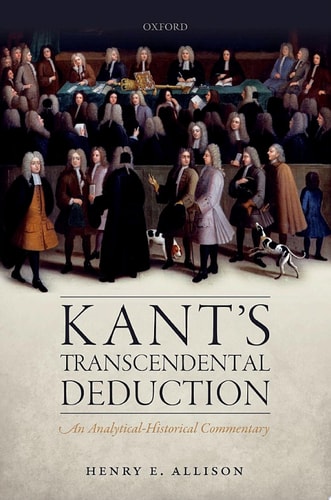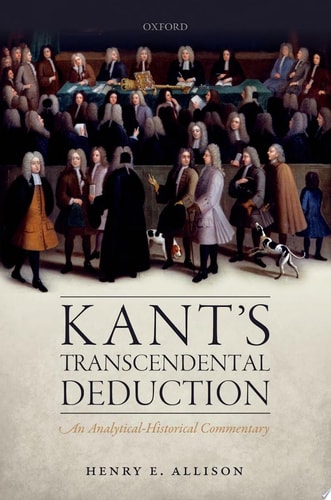
Kant's Transcendental Deduction
0
0
As an Amazon Associate and affiliate partner, Menrva Books earns from qualifying purchases. Learn more
Author Description
Henry E. Allison Presents An Analytical And Historical Commentary On Kant`s Transcendental Deduction Of The Pure Concepts Of The Understanding In The Critique Of Pure Reason. He Argues That, Rather Than Providing A New Solution To An Old Problem (refuting A Global Skepticism Regarding The Objectivity Of Experience), It Addresses A New Problem (the Role Of A Priori Concepts Or Categories Stemming From The Nature Of The Understanding In Grounding This Objectivity), And He Traces The Line Of Thought That Led Kant To The Recognition Of The Significance Of This Problem In His 'pre-critical' Period. Allison Locates Four Decisive Steps In This Process: The Recognition That Sensibility And Understanding Are Distinct And Irreducible Cognitive Powers, Which Kant Referred To As A 'great Light' Of 1769; The Subsequent Realization That, Though Distinct, These Powers Only Yield Cognition When They Work Together, Which Is Referred To As The 'discursivity Thesis' And Which Led Directly To The Distinction Between Analytic And Synthetic Judgments And The Problem Of The Synthetic A Priori; The Discovery Of The Necessary Unity Of Apperception As The Supreme Norm Governing Discursive Cognition; And The Recognition, Through The Influence Of Tetens, Of The Role Of The Imagination In Mediating Between Sensibility And Understanding. In Addition To The Developmental Nature Of The Account Of Kant`s Views, Two Distinctive Features Of Allison'sreading Of The Deduction Are A Defense Of Kant`s Oft Criticized Claim That The Conformity Of Appearances To The Categories Must Be Unconditionally Rather Than Merely Conditionally Necessary (the 'non-contingency Thesis') And An Insistence That The Argument Cannot Be Separated From Kant`s Transcendental Idealism (the 'non-separability Thesis').
Menrva's Summary
THE THESIS
This work investigates the core question of how Kant’s Transcendental Deduction functions within the Critique of Pure Reason to ground the objectivity of experience. Henry E. Allison, a prominent scholar of German Idealism, utilizes a rigorous historical and analytical framework to argue that Kant’s project addresses a specific problem regarding the role of a priori concepts rather than merely attempting to refute global skepticism. By tracing the development of Kant’s thought from his pre-critical period, Allison identifies the logical progression of the categories and their necessity in human cognition.
THE SCOPE MAP
What You Will Find
- An analysis of the 'great light' of 1769 regarding the distinction between sensibility and understanding.
- A detailed examination of the 'discursivity thesis' and its impact on synthetic a priori judgments.
- A defense of the 'non-contingency thesis' regarding the conformity of appearances to categories.
- An argument for the 'non-separability thesis' linking the deduction to transcendental idealism.
Scope Limits
- The text does not provide a general introduction to Kantian philosophy for lay readers.
- It focuses specifically on the Transcendental Deduction rather than the entirety of the Critique of Pure Reason.
THE AUTHORITY PERSPECTIVE
Scholars frequently cite this work as a definitive and highly technical interpretation of Kant’s most difficult arguments. Readers often note the academic density of the prose, which requires a strong background in Kantian terminology to navigate effectively.
Page Count:
480
Publication Date:
2015-01-01
Publisher:
Oup Oxford
ISBN-10:
0191037842
ISBN-13:
9780191037849
Philosophy
Kant
Epistemology
Metaphysics
Academic Philosophy
Community Tags
Similar Books