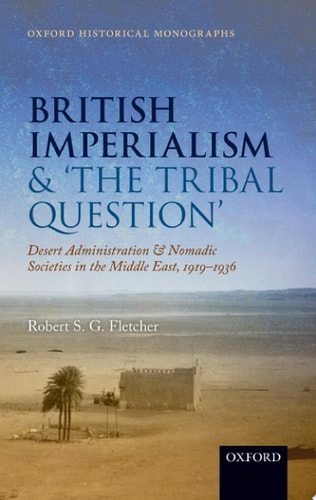
British Imperialism and 'The Tribal Question': Desert Administration and Nomadic Societies in the Middle East, 1919-1936
0
0
As an Amazon Associate and affiliate partner, Menrva Books earns from qualifying purchases. Learn more
Author Description
British Imperialism and 'The Tribal Question ' reconstructs the history of Britain's presence in the deserts of the interwar Middle East, making the case for its significance to scholars of imperialism and of the region's past. It tells the story of what happened when the British Empire and Bedouin communities met on the desert frontiers between the Mediterranean Sea and the Persian Gulf. It traces the workings of the resulting practices of 'desert administration' from their origins in the wake of one World War to their eclipse after the next, as British officials, Bedouin shaykhs, and nationalist politicians jostled to influence desert affairs. Drawn to the commanding heights of political society in the region's towns and cities, historians have tended to afford frontier 'margins' merely marginal treatment. Instead, this volume combines the study of imperialism, nomads, and the desert itself to reveal the centrality of 'desert administration' to the working of Britain's empire, repositioning neglected frontier areas as nerve centres of imperial activity. British Imperialism and 'The Tribal Question ' leads the shift in historians' attentions from the familiar, urban seats of power to the desert 'hinterlands' that have long been obscured.
Menrva's Summary
THE THESIS
This work investigates how the British Empire managed nomadic societies in the Middle East during the interwar period, arguing that desert administration was central to imperial governance rather than a peripheral concern. Robert S. G. Fletcher, a historian specializing in the British Empire and the Middle East, utilizes archival records and administrative correspondence to challenge the urban-centric focus of traditional historiography. He demonstrates that the interaction between British officials and Bedouin shaykhs formed a critical component of regional control and imperial strategy between 1919 and 1936.
THE SCOPE MAP
What You Will Find
- Analysis of British administrative practices in desert frontiers from the Mediterranean to the Persian Gulf.
- Examination of the power dynamics between British officials, Bedouin leaders, and nationalist politicians.
- Historical documentation of the interwar period's geopolitical shifts in the Middle East.
Scope Limits
- The study focuses primarily on the British administrative perspective and its direct interactions with nomadic groups.
- The narrative concludes with the eclipse of these specific administrative practices following the onset of the Second World War.
THE AUTHORITY PERSPECTIVE
Scholars of imperial history recognize this volume as a significant contribution to the study of frontier administration and nomadic-state relations. Readers frequently note the academic density of the prose and the author's success in repositioning neglected geographical areas as central to the broader imperial project.
Page Count:
352
Publication Date:
2015-01-01
Publisher:
OUP Oxford
ISBN-10:
0191045551
ISBN-13:
9780191045554
History
Great Britain
Middle Eastern
Nomadic Studies
British Empire
Colonialism
Community Tags
Similar Books