Mors Britannica: Lifestyle & Death-Style in Britain Today
0
0
As an Amazon Associate and affiliate partner, Menrva Books earns from qualifying purchases. Learn more
Author Description
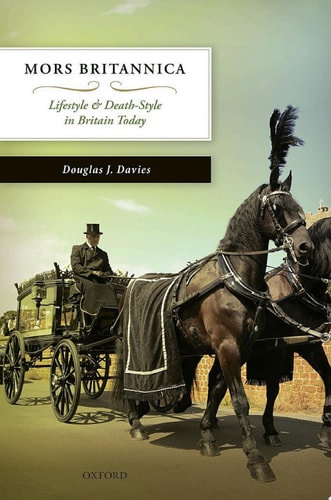
A people's lifestyle is one thing, their death-style another. The proximity or distance between such styles says much about a society, not least in Britain today. Mors Britannica takes up this style-issue in a society where cultural changes involve distinctions between traditional religion, secularisation, and emergent forms of spirituality, all of which involve emotions, where fear, longing, and a sense of loss rise in waves when death marks the root embodiment of our humanity. These world-orientations, evident in older and newer ritual practices, engage death in the hope and desire that love, relationships, community, and human identity be not rendered meaningless. Yet both emotions and ritual have an uneasiness to them because 'death' is a slippery topic as the twenty-first century gets under way in Britain. In this work, Douglas J. Davies draws from a largely anthropological-sociological perspective, with consideration of history, literature, philosophy, psychology, and theology, to provide a window into British life and insights into the foundation links between individuals and society, across the spectrum of traditionally religious views through to humanist and secular alternatives. He considers memorial sites (from churchyards to roadside memorials); forms of corporeal disposal (from cremation to composting); and death rites in a range of religious and secular traditions.
Menrva's Summary
THE THESIS
This work investigates the relationship between contemporary British lifestyle and the evolving rituals surrounding death. Douglas J. Davies, a professor of theology and religion with extensive expertise in the anthropology of death, utilizes a multidisciplinary framework to analyze how modern British society navigates the end of life. By synthesizing historical, sociological, and psychological data, the author argues that current death-styles reflect a complex tension between traditional religious practices, secularization, and emerging forms of personal spirituality.
THE SCOPE MAP
What You Will Find
- Analysis of memorialization practices ranging from traditional churchyards to modern roadside shrines.
- Comparative study of corporeal disposal methods including cremation and emerging ecological options like composting.
- Examination of diverse death rites across religious, humanist, and secular belief systems.
Scope Limits
- The analysis is geographically restricted to the United Kingdom.
- The text does not provide a clinical or medical guide to the biological processes of dying.
THE AUTHORITY PERSPECTIVE
Scholars and students of sociology frequently cite this text as a comprehensive resource for understanding the intersection of ritual and identity in modern Britain. Experts highlight the academic density of the prose, noting that it serves as a foundational text for those studying the cultural anthropology of death.
Page Count:
436
Publication Date:
2015-01-01
Publisher:
OUP Oxford
ISBN-10:
0191040010
ISBN-13:
9780191040016
Religion
Secularism
Anthropology
Sociology
British Culture
Death Studies
Community Tags
Similar Books