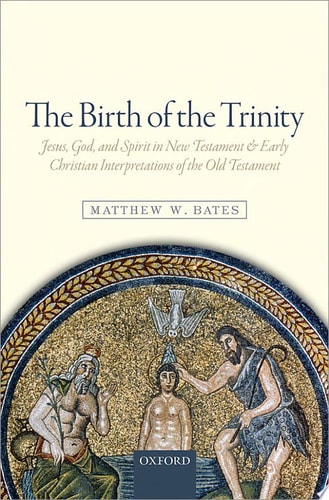
The Birth of the Trinity
0
0
As an Amazon Associate and affiliate partner, Menrva Books earns from qualifying purchases. Learn more
Author Description
How And When Did Jesus And The Spirit Come To Be Regarded As Fully God? The Birth Of The Trinity Offers A New Historical Approach By Exploring The Way In Which First- And Second-century Christians Read The Old Testament In Order To Differentiate The One God As Multiple Persons. The Earliest Christians Felt They Could Metaphorically Overhear Divine Conversations Between The Father, Son, And Spirit When Reading The Old Testament. When These Snatches Of Dialogue Are Connected And Joined, They Form A Narrative About The Unfolding Interior Divine Life As Understood By The Nascent Church. What Emerges Is Not A Static Portrait Of The Triune God, But A Developing Story Of Divine Persons Enacting Mutual Esteem, Voiced Praise, Collaborative Strategy, And Self-sacrificial Love. The Presence Of Divine Dialogue In The New Testament And Early Christian Literature Shows That, Contrary To The Claims Of James Dunn And Bart Ehrman (among Others), The Earliest Christology Was The Highest Christology, As Jesus Was Identified As A Divine Person Through Old Testament Interpretation. The Result Is A Trinitarian Biblical And Early Christian Theology.
Menrva's Summary
THE THESIS
This book investigates how early Christians utilized Old Testament interpretation to identify Jesus and the Spirit as fully divine persons within the Godhead. Matthew W. Bates, a scholar of theology and biblical studies, challenges the common historical-critical consensus that high Christology was a late development. He argues that the earliest Christian communities perceived divine dialogue between the Father, Son, and Spirit within the Hebrew scriptures, establishing a Trinitarian framework from the outset.
THE SCOPE MAP
What You Will Find
- Analysis of first- and second-century Christian hermeneutics regarding the Old Testament
- Examination of divine dialogue as a narrative device for understanding the interior life of God
- Counter-arguments to the developmental theories proposed by scholars such as James Dunn and Bart Ehrman
Scope Limits
- The text does not provide a comprehensive history of later ecumenical councils or post-Nicene dogmatic formulations
- It focuses primarily on the earliest formative period of Christian thought rather than medieval or modern theological developments
THE AUTHORITY PERSPECTIVE
Scholars and students of theology frequently note the academic rigor and specific hermeneutical focus of Bates's argument. Experts highlight this as a significant contribution to the ongoing debate regarding the origins of high Christology in the early church.
Page Count:
264
Publication Date:
2015-01-01
Publisher:
Oup Oxford
ISBN-10:
0191045861
ISBN-13:
9780191045868
Christology
Church History
Trinitarian Theology
Christian Theology
Community Tags
Similar Books