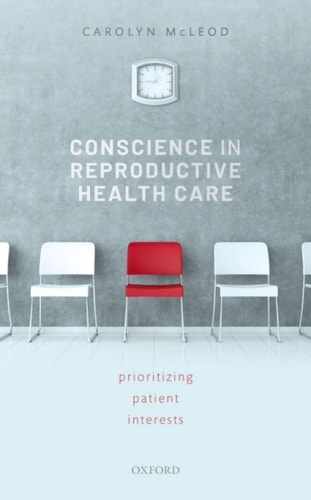
Conscience in Reproductive Health Care: Prioritizing Patient Interests
0
0
As an Amazon Associate and affiliate partner, Menrva Books earns from qualifying purchases. Learn more
Author Description
Conscience in Reproductive Health Care responds to the growing worldwide trend of health care professionals conscientiously refusing to provide abortions and similar reproductive health services in countries where these services are legal and professionally accepted. Carolyn McLeod argues that conscientious objectors in health care should prioritize the interests of patients in receiving care over their own interest in acting on their conscience. She defends this "prioritizing approach" to conscientious objection over the more popular "compromise approach" without downplaying the importance of health care professionals having a conscience or the moral complexity of their conscientious refusals. McLeod's central argument is that health care professionals who are gatekeepers of services such as abortions are fiduciaries for their patients and for the public they are licensed to serve. As such, they owe a duty of loyalty to these beneficiaries and should give primacy to their beneficiaries' interests in accessing care. This conclusion is informed by what McLeod believes is morally at stake for the main parties to the conflicts generated by conscientious refusals: the objector and the patient. What is at stake, according to McLeod, depends on the relevant socio-political context, but typically includes the objector's integrity and the patient's interest in avoiding harm.
Menrva's Summary
THE THESIS
How should health care professionals balance their personal moral conscience against their professional duty to provide legal reproductive health services? Carolyn McLeod, a philosopher specializing in bioethics, examines the tension between the rights of conscientious objectors and the needs of patients. She argues for a 'prioritizing approach,' positing that because health care providers act as fiduciaries for the public, their duty of loyalty to patients must supersede their personal moral objections when those objections impede access to legal medical care.
THE SCOPE MAP
What You Will Find
- A philosophical framework based on fiduciary duty in medicine
- Analysis of the moral stakes for both objectors and patients
- Evaluation of the 'compromise approach' versus the 'prioritizing approach'
- Discussion of socio-political contexts affecting reproductive health access
Scope Limits
- Does not provide a legal handbook for institutional policy implementation
- Focuses primarily on reproductive health rather than broader conscientious objection in other medical specialties
THE AUTHORITY PERSPECTIVE
Scholars in bioethics recognize this work as a rigorous philosophical defense of patient-centered care within the context of reproductive rights. Readers frequently note the academic density of the prose, which provides a structured argument that challenges standard interpretations of professional autonomy.
Page Count:
224
Publication Date:
2020-01-01
Publisher:
OUP Oxford
ISBN-10:
0191047260
ISBN-13:
9780191047268
Philosophy
Medical Ethics
Public Health
Medicine
Medical
Bioethics
Allied Health
Reproductive health
Law and Medicine
Community Tags
Similar Books