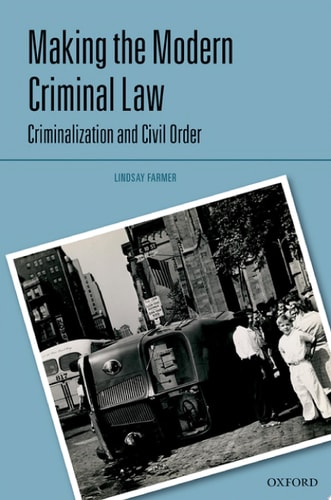
Making the Modern Criminal Law
0
0
As an Amazon Associate and affiliate partner, Menrva Books earns from qualifying purchases. Learn more
Author Description
The Criminalization Series Arose From An Interdisciplinary Investigation Into Criminalization, Focussing On The Principles That Might Guide Decisions About What Kinds Of Conduct Should Be Criminalized, And The Forms That Criminalization Should Take. Developing A Normative Theory Of Criminalization, The Series Tackles The Key Questions At The Heart Of The Issue: What Principles And Goals Should Guide Legislators In Deciding What To Criminalize? How Should Criminal Wrongs Be Classified And Differentiated? How Should Law Enforcement Officials Apply The Law's Specifications Of Offences? This, The Fifth Book In The Series, Offers A Historical And Conceptual Account Of The Development Of The Modern Criminal Law In England And As It Has Spread To Common Law Jurisdictions Around The World. The Book Offers A Historical Perspective On The Development Of Theories Of Criminalization. It Shows How The Emergence Of Theories Of Criminalization Is Inextricably Linked To Modern Understandings Of The Criminal Law As A Conceptually Distinct Body Of Rules, And How This In Turn Has Been Shaped By The Changing Functions Of Criminal Law As An Instrument Of Government In The Modern State. The Book Is Structured In Two Main Parts. The First Traces The Development Of The Modern Law As A Distinct, And Conceptually Distinct Body Of Rules, Looking In Particular At Ideas Of Jurisdiction, Codification And Responsibility. The Second Part Then Engages In Detailed Analysis Of Specific Areas Of Criminal Law, Focusing On Patterns Of Criminalization In Relation To Property, The Person, And Sexual Conduct.
Menrva's Summary
THE THESIS
This book investigates the historical and conceptual evolution of modern criminal law to determine how its function as an instrument of government has shaped current theories of criminalization. Lindsay L. Farmer, a scholar in legal history and theory, utilizes a combination of historical analysis and normative legal theory to examine how criminal law emerged as a distinct body of rules. The work argues that the development of criminalization theories is inseparable from the changing role of the state and the administrative requirements of modern governance.
THE SCOPE MAP
What You Will Find
- Historical development of criminal law in England and its influence on common law jurisdictions.
- Analysis of key legal concepts including jurisdiction, codification, and individual responsibility.
- Examination of criminalization patterns regarding property, the person, and sexual conduct.
Scope Limits
- The text does not provide a comprehensive guide to contemporary criminal procedure or specific statutory codes.
- It does not focus on the sociological impact of criminal law on marginalized populations.
THE AUTHORITY PERSPECTIVE
Legal scholars and historians frequently cite this work as a significant contribution to the understanding of criminal law as a conceptual framework. Experts note the academic rigor of the prose, positioning it as a primary resource for those studying the intersection of legal theory and state governance.
Page Count:
360
Publication Date:
2016-01-01
Publisher:
Oxford University Press
ISBN-10:
0191058599
ISBN-13:
9780191058592
Jurisprudence
Legal History
Criminal Law
Law
Community Tags
Similar Books