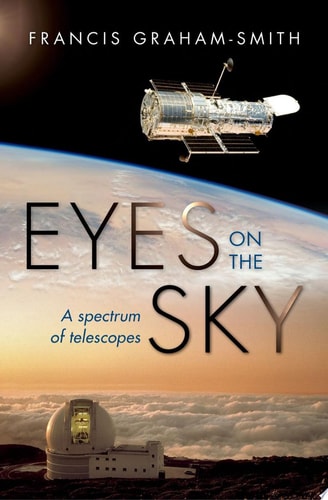
Eyes on the Sky
0
0
As an Amazon Associate and affiliate partner, Menrva Books earns from qualifying purchases. Learn more
Author Description
Four Centuries Ago, Galileo First Turned A Telescope To Look Up At The Night Sky. His Discoveries Opened The Cosmos, Revealing The Geometry And Dynamics Of The Solar System. Today's Telescopic Equipment, Stretching Over The Whole Spectrum From Visible Light To Radio And Millimetre Astronomy, Through Infrared To Ultraviolet, X-rays And Gamma Rays, Has Again Transformed Our Understanding Of The Whole Universe. In This Book Francis Graham-smith Explains How This Technology Can Be Engaged To Give Us A More In-depth Picture Of The Nature Of The Universe. Looking At Both Ground-based Telescopes And Telescopes On Spacecraft, He Analyses Their Major Discoveries, From Planets And Pulsars To Cosmology. Large Research Teams And Massive Data Handling Are Necessary, But The Excitement Of Discovery Is Increasingly Shared By A Growing Public, Who Can Even Join In Some Of The Analysis By Remote Computer Techniques. Observational Astronomy Has Become International. All Major Projects Are Now Partnerships; Most Notably The Square Kilometre Array, Which Will Involve Astronomers From Over 100 Countries And Will Physically Exist In Several Of Them. Covering The History And Development Of Telescopes From Galileo To The Present Day, Eyes On The Sky Traces What Happens When Humankind Looks Up.
Menrva's Summary
THE THESIS
How has the evolution of telescopic technology from the era of Galileo to the present day fundamentally altered our comprehension of the universe? Francis Graham-Smith, a distinguished astronomer, examines the progression of observational tools across the entire electromagnetic spectrum. He argues that the transition from simple optical lenses to complex, international multi-wavelength arrays has shifted astronomy from a solitary pursuit to a collaborative, data-intensive global enterprise. The text provides a framework for understanding how these technological advancements translate into specific discoveries regarding the dynamics of the solar system and the broader cosmos.
THE SCOPE MAP
What You Will Find
- Historical progression of telescope design from the 17th century to modern space-based observatories.
- Technical explanations of multi-wavelength astronomy, including radio, infrared, ultraviolet, X-ray, and gamma-ray detection.
- Analysis of the shift toward international research partnerships and large-scale data management.
- Case studies on significant astronomical findings, including planetary dynamics and pulsar research.
Scope Limits
- The text does not provide a comprehensive manual for amateur telescope construction or operation.
- It does not focus on theoretical physics or mathematical proofs beyond the scope of observational results.
THE AUTHORITY PERSPECTIVE
Experts recognize this work as a clear, accessible overview of the history and future of observational astronomy. Readers frequently note that the prose balances technical detail with a narrative style suitable for both students and interested laypeople.
Page Count:
320
Publication Date:
2016-01-01
Publisher:
Oxford University Press
ISBN-10:
0191053600
ISBN-13:
9780191053603
Science
Astronomy
Astrophysics
Science History
Technology
Community Tags
Similar Books