Malleable Anatomies
0
0
As an Amazon Associate and affiliate partner, Menrva Books earns from qualifying purchases. Learn more
Author Description
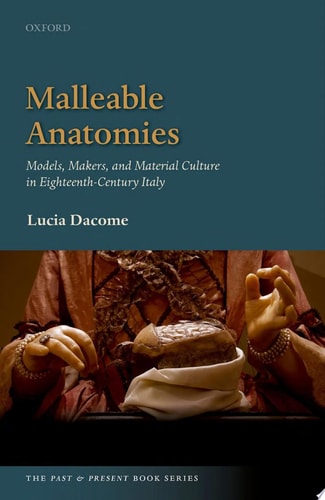
Malleable Anatomies offers an account of the early stages of the practice of anatomical modelling in mid-eighteenth-century Italy. It investigates the 'mania' for anatomical displays that swept the Italian peninsula, and traces the fashioning of anatomical models as important social, cultural, and political as well as medical tools. Over the course of the eighteenth century, anatomical specimens offered particularly accurate insights into the inner body. Being coloured, soft, malleable, and often life-size, they promised to foster anatomical knowledge for different audiences in a delightful way. But how did anatomical models and preparations inscribe and mediate bodily knowledge? How did they change the way in which anatomical knowledge was created and communicated? And how did they affect the lives of those involved in their production, display, viewing, and handling? Examining the circumstances surrounding the creation and early viewing of anatomical displays in Bologna and Naples, Malleable Anatomies addresses these questions by reconstructing how anatomical modelling developed at the intersection of medical discourse, religious ritual, antiquarian and artistic cultures, and Grand Tour display. While doing so, it investigates the development of anatomical modelling in the context of the diverse worlds of visual and material practices that characterized the representation and display of the body in mid-eighteenth-century Italy. Drawing attention to the artisanal dimension of anatomical practice, and to the role of women as both makers and users of anatomical models, it considers how anatomical specimens lay at the centre of a composite world of social interactions, which led to the fashioning of modellers as anatomical celebrities. Moreover, it examines how anatomical displays transformed the proverbially gruesome practice of anatomy into an enthralling experience that engaged audiences' senses.
Menrva's Summary
THE THESIS
This work investigates how the emergence of anatomical modeling in mid-eighteenth-century Italy transformed the representation of the human body into a social, cultural, and political phenomenon. Lucia Dacome, a historian of science and medicine, utilizes archival records and material culture analysis to argue that anatomical models functioned as mediators between medical discourse, religious ritual, and the aesthetic expectations of the Grand Tour. By examining the intersection of artisanal practice and scientific inquiry, the author demonstrates how these models redefined the communication of bodily knowledge.
THE SCOPE MAP
What You Will Find
- Historical analysis of anatomical display practices in Bologna and Naples.
- Examination of the role of women as both creators and consumers of anatomical models.
- Investigation into the intersection of medical science, artistic culture, and religious ritual.
- Analysis of the transition from gruesome anatomical practice to sensory-engaging public display.
Scope Limits
- The study is geographically restricted to the Italian peninsula during the mid-eighteenth century.
- It does not provide a comprehensive technical manual on the chemical preservation methods used by historical modelers.
THE AUTHORITY PERSPECTIVE
Scholars in the history of science frequently cite this text for its nuanced integration of material culture and medical history. Readers often note the academic density of the prose, which provides a rigorous examination of the social dynamics surrounding anatomical celebrity in the Enlightenment era.
Page Count:
320
Publication Date:
2017-01-01
Publisher:
Oxford University Press
ISBN-10:
0191055794
ISBN-13:
9780191055799
Anatomy
Cultural History
Eighteenth Century
Art History
Medicine history
Community Tags
Similar Books