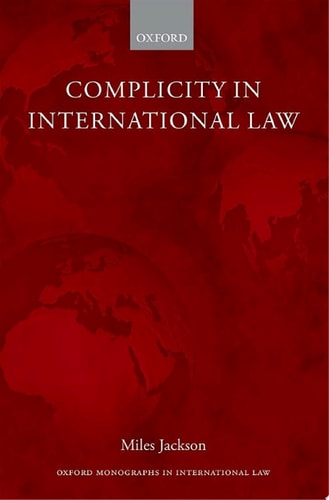
Complicity in International Law
0
0
As an Amazon Associate and affiliate partner, Menrva Books earns from qualifying purchases. Learn more
Author Description
This book examines how international law prohibits state and individual complicity. Complicity is a derivative form of responsibility that links an accomplice to the wrongdoing of a principal actor. Whenever a legal system prohibits complicity, it must address certain questions as to the content and structure of the rules. To understand how international law answers these questions, this book proposes an analytical framework in which complicity rules may be assessed and defends a normative claim as to how they should be structured. Anchored by this framework and normative claim, this book shows that international criminal law regulates individual complicity in a comprehensive way, using the doctrines of instigation and aiding and abetting to inculpate complicit participants in international crimes. By contrast, international law's regulation of state complicity was historically marked by an absence of complicity rules. This is changing. In respect of state complicity in the wrongdoing of another state, international law now imposes both specific and general complicity obligations, the latter prohibiting states from aiding or assisting another state in the commission of any internationally wrongful act. In respect of the ways that states participate in harms caused by non-state actors, the traditional normative structure of international law, which imposed obligations only on states, foreclosed the possibility of prohibiting the state's participation as a form of complicity. As that traditional normative structure has evolved, so the possibility of holding states responsible for complicity in the wrongdoing of non-state actors has emerged. More and more, both the wrongs that international actors commit, and the wrongs they help or encourage others to commit, matter.
Menrva's Summary
THE THESIS
This book investigates the mechanisms by which international law identifies and prohibits complicity in the wrongdoing of both states and individuals. Miles Jackson, a scholar of international law, constructs an analytical framework to evaluate how legal systems define derivative responsibility. He argues that while international criminal law has developed robust doctrines for individual accountability, the regulation of state complicity is currently undergoing a significant normative shift regarding non-state actors.
THE SCOPE MAP
What You Will Find
- An analytical framework for assessing complicity rules in international legal systems.
- Examination of individual complicity doctrines, specifically instigation and aiding and abetting.
- Analysis of state responsibility for aiding or assisting other states in wrongful acts.
- Discussion on the evolving legal status of state participation in harms caused by non-state actors.
Scope Limits
- The text does not provide a comprehensive history of every international treaty regarding complicity.
- It does not focus on domestic criminal law applications outside of their relevance to international standards.
THE AUTHORITY PERSPECTIVE
Legal scholars and practitioners frequently cite this work as a rigorous examination of the structural inconsistencies within international responsibility regimes. Experts highlight the book's utility in clarifying the distinction between individual and state-level complicity obligations.
Page Count:
272
Publication Date:
2015-01-01
Publisher:
OUP Oxford
ISBN-10:
0191056758
ISBN-13:
9780191056758
Legal Theory
Human rights
Professional Career & Trade
International Law
State Responsibility