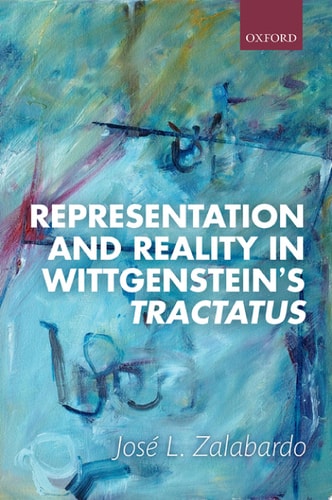
Representation and Reality in Wittgenstein's Tractatus
0
0
As an Amazon Associate and affiliate partner, Menrva Books earns from qualifying purchases. Learn more
Author Description
José L. Zalabardo Puts Forward A New Interpretation Of Central Ideas In Wittgenstein's Tractatus Logico-philosophicus Concerning The Structure Of Reality And Our Representations Of It In Thought And Language. He Shows The Origins Of Wittgenstein's Picture Theory Of Propositional Representation In Russell's Theories Of Judgment, Arguing That The Picture Theory Is Wittgenstein's Solution To Some Of The Problems That He Found In Russell's Position. Zalabardo Defends The View That, For Wittgenstein, Facts In General, And The Facts That Play The Role Of Propositions In Particular, Are Not Composite Items, Arising From The Combination Of Their Constituents. They Are Ultimate, Irreducible Units, And What We Think Of As Their Constituents Are Features That Facts Have In Common With One Another. These Common Features Have Built Into Them Their Possibilities Of Combination With Other Features Into Possible Situations. This Is The Source Of The Tractarian Account Of Non-actual Possibilities. It Is Also The Source Of The Idea That It Is Not Possible To Produce Propositions Answering To Certain Descriptions, Including Those That Would Give Rise To Russell's Paradox. Zalabardo Then Considers Wittgenstein's View That Every Proposition Is A Truth Function Of Elementary Propositions. He Argues That This View Is Motivated By Wittgenstein's Epistemology Of Logic, According To Which We Should Be Able To See Logical Relations By Inspecting The Structures Of Propositions. Finally, Zalabardo Considers The Problems That We Face If We Try To Extend The Application Of The Picture Theory From Elementary Propositions To Truth Functions Of These.
Menrva's Summary
THE THESIS
This work investigates the structural relationship between reality and propositional representation as presented in Ludwig Wittgenstein's Tractatus Logico-philosophicus. Prof. José L. Zalabardo, a specialist in analytic philosophy, utilizes a rigorous analytical framework to re-examine the origins of the picture theory of language. He argues that Wittgenstein’s account of facts as irreducible units, rather than composite structures, provides a novel solution to the logical problems inherent in Bertrand Russell’s earlier theories of judgment.
THE SCOPE MAP
What You Will Find
- A detailed reconstruction of the picture theory of propositional representation.
- An analysis of the relationship between Wittgenstein's logic and Russell's theories of judgment.
- A technical explanation of how common features of facts dictate possibilities of combination.
- An examination of the epistemology of logic regarding truth functions of elementary propositions.
Scope Limits
- The text does not provide a general biography of Wittgenstein or a historical overview of the Vienna Circle.
- It does not address the later philosophy of the Philosophical Investigations.
THE AUTHORITY PERSPECTIVE
Experts recognize this text as a sophisticated contribution to Wittgensteinian scholarship, particularly for its focus on the ontological status of facts. Readers frequently note the academic density of the prose, which requires a strong background in formal logic and analytic philosophy to fully grasp the author's arguments.
Page Count:
256
Publication Date:
2015-01-01
Publisher:
Oup Oxford
ISBN-10:
0191061484
ISBN-13:
9780191061486
Philosophy
Wittgenstein
Logic
Epistemology
Community Tags
Similar Books